
Practitioner’s Preface
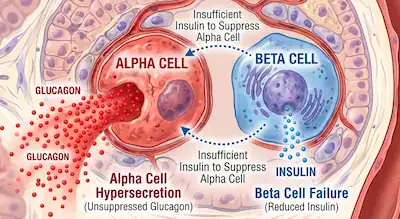
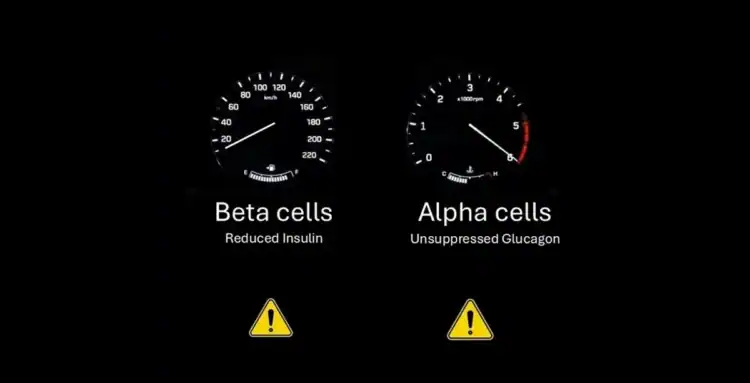
Type 2 diabetes has traditionally been viewed as a disorder of insulin secretion and pancreatic beta-cell failure. It can be better understood as a bi-hormonal dysfunction characterized by insufficient insulin secretion from pancreatic beta cells to suppress the hypersecretion of glucagon from pancreatic alpha cells. From a clinical perspective, that’s comparable to fixing a broken car by repairing the brakes, while ignoring a stuck gas pedal.
The bi-hormonal theory of diabetes was first conceptualized by Dr. Roger Unger in 1970 in a publication that provided evidence for pancreatic alpha-cell dysfunction in humans and that the alpha cells of people with diabetes were over-secreting glucagon [1]. That paper was followed in 1975 by Unger and his colleague Lelio Orci, who published the seminal paper on the bi-hormonal hypothesis titled “Essential Role of Glucagon in the Pathogenesis of Diabetes Mellitus” [2]. The bihormonal theory of diabetes continued to be Unger’s life’s work, which culminated in a 2012 publication [3] that was published only 8 years before his death. In his final paper, Unger stated;
“the hormone glucagon has long been dismissed as a minor contributor to metabolic disease, however, here [in this publication] we propose that glucagon excess, rather than insulin deficiency, is the sine qua non of diabetes.”
According to Unger, glucagon excess is the essential condition, without which diabetes is simply not possible, a concept he outlines in detail in his final publication. Unger’s theory explains why long-term use of a very-low-carbohydrate / ketogenic diet in type 2 diabetes may eventually lead to a puzzling shift where blood sugar levels begin to rise despite flawless dietary adherence. As outlined in a previous article titled Blood Sugar May Increase After Years on a Ketogenic Diet in Type 2 Diabetes, this physiological paradox reflects a state of adaptive, relative insulin deficiency that inadvertently unleashes glucagon-driven gluconeogenesis—a condition we can define as Alpha Cell Dominance.
Four Approaches to Type 2 Diabetes Remission
There are four documented ways to put type 2 diabetes into remission: a very low-calorie diet [6,7,8], bariatric surgery (especially the use of the Roux-en-Y procedure) [9,10], a ketogenic diet [4,5], and use of GLP-1 agonists such as semaglutide, dulaglutide, and tirzepatide [11]. Each comes with advantages and limitations.
A Well-Designed Ketogenic Diet
Since 2017, and where appropriate, I have supported people seeking remission from the symptoms of type 2 diabetes by following a very-low-carbohydrate / ketogenic diet (defined as ~30-50 g carbohydrate/day). Since this diet is both safe and effective, and in my experience, the hunger that accompanies a low-calorie, energy-deficient diet makes it unsustainable long term, a very low-carbohydrate (ketogenic) diet was and is a viable approach over bariatric surgery, which I believe is best used as a last resort.
Those in my practice who followed a well-designed very-low-carbohydrate / ketogenic diet had results that mirrored the published studies of Virta Health in their one-year data [4], with an average decrease in HbA1c from 7.6% to 6.3% and an average weight loss of 12%. As in Virta Health’s two-year data [5], those who continued eating a very-low-carbohydrate diet sustained their metabolic improvements at two years.
Even those who followed a low-carbohydrate diet (defined as <130 g carbohydrate/day, but in Meal Plans that I design are usually between 60 and 85 g of carbs per day) significantly improved their metabolic health due to an overall decrease in dietary carbohydrate, along with an avoidance of simple carbs. These dietary changes, combined with lifestyle modifications that supported a reduction in insulin resistance, enabled those more recently diagnosed with type 2 diabetes to achieve full remission of symptoms. Even one or two years later, clients continuing to follow the low-carb Meal Plan that I designed for them continued to experience stable fasting blood glucose, HbA1C, and weight.
Long-Term Ketogenic Diet Data: The Blind Spot
We have good, solid one- and two-year clinical data in those who have been diagnosed with type 2 diabetes about following a very-low-carbohydrate (ketogenic diet), but at this time, there is very limited long-term data. What the existing long-term data shows us is highly revealing:
-
At 1 year: The average HbA1c had dropped significantly from 7.6% to 6.3% [4]
-
At 2 Years: The average HbA1c climbed back up to 6.7% [5].
-
At 5 Years: The average 5-year HbA1c for the completers averaged at ~7.3% [12]. Only 20% of the original participants who continued for five years achieved complete diabetes remission [12].
In 2023, Dr. David Unwin, a UK-based General Practitioner, published a paper analyzing an 8-year dataset from his real-world NHS practice, Norwood Surgery [13]. Across the 8 years, the median HbA1c fell to a sustained median level of 6.4% (46 mmol/mol) [13], and 51% achieved drug-free remission of type 2 diabetes. However, because of rolling enrollment, the duration of time patients spent on the diet varied wildly, and the paper notes that the average time spent on the diet was 33 months (~2.7 years).
In the publication, Dr. Unwin mentioned that HbA1C tended to drift or worsen as time went on. This insight came from his ongoing clinical observations of individual patient charts over the lifespan of the service evaluation, rather than a year-by-year data table. Dr. Unwin concluded that the increase in HbA1c was the result of “carb creep” and was tied to a self-reported increase in carbohydrate consumption rather than a failure of the biological mechanism.
While “carb creep” may explain glycemic drift for many patients, this data and the five-year Virta Health data do not account for a subset of individuals whose adherence to carbohydrate restriction remained flawless, yet whose blood glucose began to rise anyway. It seems there may be a blind spot in the current literature, one that the bi-hormonal theory of diabetes explains. This upward trend isn’t always “carb creep”—it is driven by the liver-pancreatic alpha cell axis, an adaptive physiological phenomenon we can call Alpha Cell Creep.
The Mechanism of Alpha Cell Dominance
To understand how “alpha cell creep” drives blood sugar upward over time, it is important to understand what happens at the level of the pancreas and how these cells communicate locally. In people who have never had type 2 diabetes, the pancreatic alpha cells and pancreatic beta cells exist in a tightly regulated paracrine relationship. This is a form of local cellular communication where one cell secretes chemical messengers that diffuse through the extracellular space to affect the nearby target cell. In healthy individuals, when insulin rises, glucagon release is suppressed.
- In healthy individuals, the beta cells of the pancreas secrete insulin when they eat, which is communicated to the alpha cells of the pancreas and signals them to stop secreting the hormone glucagon. The insulin that is released locally within the pancreas first acts as an immediate, powerful biological “brake” that shuts down glucagon secretion from the alpha cells.
- When someone hasn’t eaten for a while, blood sugar falls, alpha cells release glucagon that binds to receptors on liver cells, and this triggers a rapid enzyme cascade (via cyclic AMP) that converts stored glycogen into glucose (glycogenolysis), releasing it into the bloodstream to fuel the brain, muscles, and organs.
- If fasting is prolonged and glycogen stores run low, glucagon released from the alpha cells signals the liver to manufacture glucose from scratch using circulating amino acids from protein (gluconeogenesis), and makes glucose from the glycerol backbone of triglycerides derived from fat, via the glycerol pathway.
The problem with gradually rising HbA1C levels arises after following a long-term, very low-carbohydrate diet, due to the reduced daily demand for insulin. When dietary carbohydrate is restricted, blood sugar is initially reduced, but so is the daily demand for insulin. Over time, the body has a much lower demand for insulin, which results in the pancreatic beta cells scaling back on insulin production. This drop in daily insulin production results in a low insulin-to-glucagon ratio.
This may lead to a state where baseline insulin secretion becomes so low that there is simply not enough local insulin present to suppress the hypersecretion of glucagon from the pancreatic alpha cells. Without insulin to quiet the alpha cells, continuous secretion of excess glucagon signals the liver to aggressively ramp up both glycogenolysis and gluconeogenesis, leaving the alpha cells entirely uninhibited in a state of Alpha Cell Dominance.
The 10% to 15% Biological Non-Responders Phenotype
Within Type 2 diabetes studies, there is a biological subset of people who are non-responders to a very low carb diet over the long term, even when they do everything right. The DiRECT trial protocols and Dr. Roy Taylor’s team [6, 7, 8] identified that 10% to 15% of patients are “non-responders” due to their underlying pancreatic biology. The literature defines this 10% to 15% phenotype as having specific characteristics:
-
The “First-Phase Insulin Response” Failure: In the responders, clearing fat out of the pancreas allows the beta cells to recover their rapid, first-phase insulin spike—the rapid, intense burst of pre-stored insulin within the first 5 to 10 minutes of glucose entering the bloodstream that acts as a metabolic brake on alpha cells. But in this 10% to 15% phenotype, the beta cells have crossed a “point of no return” of dedifferentiation. They simply could not secrete that rapid burst of local insulin anymore.
- Lower Baseline Fasting Insulin: Those who failed to achieve remission typically had lower baseline fasting plasma insulin levels, pointing to more exhausted beta-cell function before the trial.
When some people with type 2 diabetes follow a very-low-carbohydrate (ketogenic) diet long-term, their
- baseline insulin drops
- beta cells are incapable of delivering the localized, high-concentration insulin burst (first phase insulin response) to suppress the neighboring alpha cells
- their alpha cells release glucagon uninhibited.
A subset of individuals may be able to achieve remission from the symptoms of type 2 diabetes but not sustain it over the long term. It isn’t due to a lack of willpower or “carb creep,” but “alpha cells creep.”
Altered Protein Dynamics & Protein-Driven Gluconeogenesis
When alpha cells are left uninhibited, the body’s response to dietary protein consumption becomes fundamentally altered. A recent review published in January 2026 titled “Effects of Protein Intake on Glucagon, Insulin, and Glucose Dynamics: implications for diabetes” [14] provides the biochemical evidence to explain this phenomenon [15,16]. This review reported that the response to protein consumption is altered in diabetes [14].
Eating protein in the absence of carbohydrate stimulates both glucagon and insulin secretion [21], and amino acids inherently favor glucagon secretion over insulin secretion, creating a lower insulin-to-glucagon ratio and a higher blood glucose level [15]. A 1975 study of untreated individuals with type 2 diabetes displayed higher glucagon and lower insulin secretion compared to non-diabetic controls, which contributed to significantly higher blood glucose levels [17]. Even after standard clinical treatments, the individuals with type 2 diabetes continued to display a reduced insulin-to-glucagon ratio compared to controls [17].
Because protein stimulates pancreatic alpha-cells to secrete glucagon much more strongly than pancreatic beta-cells to secrete insulin,
- A high intake of protein will result in a higher glucagon-to-insulin ratio,
- When the amino acids from dietary protein enter the bloodstream, they stimulate these unmoderated alpha cells to hypersecrete glucagon,
- When the liver is exposed to a wave of glucagon, it is strongly signaled to ramp up gluconeogenesis, turning those amino acids directly into glucose.
This explains why blood glucose can spike after a low-carbohydrate, high-protein meal despite there being zero or near-zero carbohydrate intake.
The solution is not to restrict carbohydrates further, or to adopt a carnivore diet.
Eliminating carbohydrates floods the body with more amino acids from protein—particularly arginine, alanine, and glycine, which most strongly trigger gluconeogenesis of any amino acids [14,21,23,24,25,26,27], amplifying the uninhibited glucagon release, and worsening the problem.
A Puzzling Shift: A Personal Case Study
My personal results following a very-low-carbohydrate (ketogenic) diet from March 2017 to March 2019 mirrored Virta Health’s data, and I was able to maintain diabetes remission for several years (March 2019 to March 2021) [22]. However, following subsequent diagnosis and treatment for profound hypothyroidism, my HbA1c continued to creep up, and I faced a puzzling shift where the same low-carbohydrate, moderately-high-protein meals I had eaten for years now triggered unexpected blood glucose spikes.
 Everyone’s blood glucose response to foods is different, but as I outlined in the previous article, on May 26, 2026, after eating 6 oz. of coho salmon with asparagus and mushrooms, without eating any carbs, my blood sugar rose to 9.3 mmol/L (167 mg/dL) after 2 hours when it was 5.2 mmol/L (94 mg/dl) before the meal. My mistake was thinking that coho salmon was a ‘fatty fish'(like sockeye or king salmon), but as a relatively lean fish, the coho salmon (even eaten with the skin) was quickly digested protein, and heavily stimulated my unmoderated alpha cells, driving gluconeogenesis in the absence of a first-phase insulin response to serve as a local insulin countersignal.

I recently made the same meal, except this time I ate 1 tbsp. cold, cooked barley 10 minutes beforehand, and my blood sugar was a perfectly flat 5.7 mmol/L (103 mg/dl) 2 hours afterwards. The explanation for why this worked comes down to controlling the rate of protein digestion and strategically restoring the paracrine brake by mimicking a first-phase insulin response.

The Critical Role of Protein Digestion Rates
The effect of dietary protein on alpha cells in those with type 2 diabetes is influenced by differences in amino acid composition related to whether the protein is from plant versus animal sources, as well as rates of digestion [18]. In general, plant proteins are slower-digesting, while animal proteins are fast-digesting; rapidly digested proteins typically result in a greater glucose excursion and a more immediate insulin and glucagon response [20]. Exceptions include casein (a slow-digesting animal protein) and pea protein (faster digesting than other plant proteins).
A 2015 systematic review and meta-analysis found that replacing 35% of total protein per day with plant protein for 8 weeks significantly lowered HbA1c levels as well as fasting insulin levels in people with type 2 diabetes [19]. While some meta-analyses attribute the blood sugar benefits purely to eating more plant-based proteins, the difference may stem from increasing the ratio of slowly-digesting proteins to fast-digesting proteins that make up the diet. Following a six-week diet of either pea plant protein (medium-fast digesting) or casein animal protein (slow digesting protein), the casein group was associated with improved insulin sensitivity and secretion, as well as lower 4-hour insulin and glucagon [18]. As the authors of the comprehensive 2026 review reported:
“A protein’s rate of digestion is a stronger indicator of its glycemic response than its origin (plant versus animal)” [14].
In individuals with type 2 diabetes where insulin secretion is blunted and delayed, eating fast-digesting “naked” protein foods, such as egg white, skinless chicken breast, or lean white fish like cod, tilapia, haddock, and yes, coho salmon, provokes an immediate, uninhibited alpha cell spike. The solution is to either strategically select slow-digesting protein sources or intentionally build structural dietary brakes to slow the digestion of protein high in gluconeogenic amino acids.
Practical Dietary Strategies
For individuals previously diagnosed with type 2 diabetes experiencing an ongoing rise in blood glucose after years on a very-low-carbohydrate (ketogenic) diet (30-50 g of carbohydrate/day), the solution targets dietary changes that promote the release of a very small amount of insulin from the pancreatic beta cells just before each protein-containing meal. This acts on the pancreatic alpha cells, preventing significant endogenous production of glucose, which underlies significant blood glucose spikes. In my practice, I am teaching clients very specific dietary strategies in designing Meal Plans to help them restore the pancreatic paracrine brake as much as possible, and below is the skeleton on which these dietary changes are built;
1. Simulate the “First-Phase Insulin Response” (The 10-Minute Rule)
Eating a small amount of slowly metabolized carbohydrates 10 minutes before eating a meal that contains protein high in gluconeogenic amino acids simulates the “first-phase insulin response” seen in healthy individuals. This coaxes the pancreatic beta cells to release a small pulse of insulin before the meal, which helps restore the pancreatic “paracrine brake” and calms unregulated glucose production coming from the alpha cells.
The key to the following examples lies in their physical matrix (fiber and resistant starch) and a micro-dose quantity to ensure that the beta cells are only nudged, without causing an independent blood sugar spike. A few highly effective examples include:
- 1 tablespoon of cold, cooked barley (a rich source of resistant starch)
- 1 tablespoon of cold, cooked lentils and whole-grain basmati rice (not “brown rice”)
- 2 to 3 whole blackberries
- 3 to 4 pods of cooked edamame (soybeans)
2. Optimize Macronutrients and Protein Types
- Moderate Protein Intake: Keep protein to a moderate intake of 0.80 g/kg/day [23]. If a higher protein intake is required, such as in the case of older adults to prevent sarcopenia, distribute protein intake evenly throughout the day in meals not above 30g of protein per day and limit protein sources that are high in the amino acids arginine, alanine, and glycine, which trigger gluconeogenesis the most [14,21,23,24,25,26,27].
- Prioritize Real, Whole Foods: Prioritize eating real, whole-food sources of protein over rapidly digested protein powders or amino acid isolates.
- Avoid Quickly Digested Protein: Avoid protein foods that are quickly digested (such as egg whites, skinless chicken breast, or lean white fish like cod, tilapia, and haddock). Reach for protein foods that naturally come with fat, including whole eggs, fatty fish like king salmon, mackerel, and sardines, and cuts of meat that include fat.
- Don’t Eat Protein “Naked”: Intentionally pair protein foods with healthy fats and fiber, incorporating structural dietary “brakes” that significantly slow down the absorption rate of amino acids into the bloodstream and slow the absorption rate of amino acids.
3. Gradually Raise the Carbohydrate Threshold
Gradually increase dietary carbohydrates from a very low-carbohydrate (ketogenic) level (30–50 grams carbohydrate /day ) to a low-carbohydrate threshold (~80 to100 grams of slowly digested carbohydrates/ day).
Combined with simulating a first-phase insulin response with a small amount of slowly metabolized carbohydrate 10 minutes before a high-protein meal, pancreatic alpha cells are prevented from driving unregulated, endogenous gluconeogenesis.
Clinical Application
By viewing the adaptive, relative insulin deficiency of type 2 diabetes through Roger Unger’s bi-hormonal lens, it can be seen that in many people, maintaining long-term remission of type 2 diabetes symptoms beyond 2-5 years requires more than keeping dietary carbohydrate intake to 30- 50 g per day (ketogenic levels). While there is ample clinical data to support that significant dietary carbohydrate restriction works very well in the first year or two in putting the symptoms of type 2 diabetes into remission, maintaining long-term glucose control often requires a strategic pivot in the types of proteins and the amount and types of carbohydrate eaten. Understanding the mechanism of Alpha Cell Dominance enables simple changes that quiet overactive alpha cells and restore metabolic balance over the long term.
More Info
If you would like dietary support to better manage your blood sugar levels after following a low-carb or very low-carb (keto) diet, please reach out. You can learn about me and the Comprehensive Dietary Package that I offer, along with specialized nutrition education teaching to help you know what to eat and when.
To your good health.
Joy
You can follow me on:
Twitter: https://twitter.com/jyerdile
Facebook: https://www.facebook.com/BetterByDesignNutrition/
Support for Rising Blood Sugar After Keto?
If you have been experiencing rising blood sugar levels despite adherence to a keto diet, I can design a Meal Plan for you that implements the strategies discussed in this article.
Quick Clinical Summary
Q: What is the bi-hormonal theory of diabetes?
A: The bi-hormonal theory of diabetes explains that diabetes is not only about dysfunction of the pancreatic beta cells, but also of the pancreatic alpha cells, and this alpha cell dysfunction drives the glucagon excess, which contributes to rising blood glucose, and drives the disease.
Q: What is Alpha Cell Dominance?
A: Alpha Cell Dominance is where baseline insulin secretion has become so low that there is not enough to suppress the hypersecretion of glucagon from the pancreatic alpha cells. Without insulin to quiet the alpha cells, continuous secretion of glucagon signals the liver to ramp up both glycogenolysis and gluconeogenesis, which results in high blood glucose levels.
Q: What are some strategies to help lower Alpha Cell Dominance?
A: Two key dietary strategies to lower alpha cell dominance include mimicking a first-phase insulin response by eating a small amount of slowly metabolized carbohydrates 10 minutes before eating a protein-containing meal, and gradually increasing the type and amount of carbohydrate.
References
- Unger RH, Aguilar-Parada E, Müller WA, Eisentraut AM. Studies of pancreatic alpha cell function in normal and diabetic subjects. J Clin Invest. 1970 Apr;49(4):837-48. doi: 10.1172/JCI106297. PMID: 4986215; PMCID: PMC322540. https://doi.org/10.1172/JCI106304
- Unger RH, Orci L. The essential role of glucagon in the pathogenesis of diabetes mellitus. Lancet. 1975 Jan 4;1(7897):14-6. doi: 10.1016/s0140-6736(75)92375-2. PMID: 46337.
- Unger RH, Cherrington AD. Glucagonocentric restructuring of diabetes: a pathophysiologic and therapeutic makeover. J Clin Invest. 2012 Jan;122(1):4-12. doi: 10.1172/JCI60016. Epub 2012 Jan 3. PMID: 22214853; PMCID: PMC3248306.
- Hallberg SJ, McKenzie AL, Williams PT, Bhanpuri NH, Peters AL, Campbell WW, Hazbun TL, Volk BM, McCarter JP, Phinney SD, Volek JS. Effectiveness and Safety of a Novel Care Model for the Management of Type 2 Diabetes at 1 Year: An Open-Label, Non-Randomized, Controlled Study. Diabetes Ther. 2018 Apr;9(2):583-612. doi: 10.1007/s13300-018-0373-9.
- Athinarayanan, S. J., Adams, R. N., Hallberg, S. J., McKenzie, A. L., Bhanpuri, N. H., Campbell, W. W., Volek, J. S., Phinney, S. D., & McCarter, J. P. (2019). Long-term effects of a novel continuous remote care intervention including nutritional ketosis for the management of type 2 diabetes: A 2-year non-randomized clinical trial. Frontiers in Endocrinology, 10, 348. https://doi.org/10.3389/fendo.2019.00348
- Lim EL, Hollingsworth KG, Aribisala BS, Chen MJ, Mathers JC, Taylor R. Reversal of type 2 diabetes: normalisation of beta cell function in association with decreased pancreas and liver triacylglycerol. Diabetologia 2011;54:2506-14. doi:10.1007/s00125-011-2204-7 pmid:21656330
- Steven S, Hollingsworth KG, Al-Mrabeh A, et al. Very low-calorie diet and 6 months of weight stability in type 2 diabetes: pathophysiological changes in responders and nonresponders. Diabetes Care 2016;39:808-15. doi:10.2337/dc15-1942 pmid:27002059
- Lean ME, Leslie WS, Barnes AC, et al. Primary care-led weight management for remission of type 2 diabetes (DiRECT): an open-label, cluster-randomised trial. Lancet 2018;391:541-51
- Cummings DE, Rubino F (2018) Metabolic surgery for the treatment of type 2 diabetes in obese individuals. Diabetologia 61(2):257—264.
- Madsen, L.R., Baggesen, L.M., Richelsen, B. et al. Effect of Roux-en-Y gastric bypass surgery on diabetes remission and complications in individuals with type 2 diabetes: a Danish population-based matched cohort study, Diabetologia (2019) 62: 611. https://doi.org/10.1007/s00125-019-4816-2
- Fadini GP, Giaccari A, Broglio F, Nollino L, Fattor B, Anichini R, Meregalli G, Avogaro A, Consoli A; GLIMPLES Study Investigators. Type 2 diabetes remission after initiation of GLP-1 receptor agonists: frequency, characteristics, and outcomes using multiple definitions in an observational study. Lancet Reg Health Eur. 2025 Oct 15;59:101499. doi: 10.1016/j.lanepe.2025.101499. PMID: 41142657; PMCID: PMC12550164.
- McKenzie AL, Athinarayanan SJ, Van Tieghem MR, Volk BM, Roberts CGP, Adams RN, Volek JS, Phinney SD, Hallberg SJ. 5-Year effects of a novel continuous remote care model with carbohydrate-restricted nutrition therapy including nutritional ketosis in type 2 diabetes: An extension study. Diabetes Res Clin Pract. 2024 Nov;217:111898. doi: 10.1016/j.diabres.2024.111898. Epub 2024 Oct 20. PMID: 39433217.
- Unwin D, Delon C, Unwin J, Tobin S, Taylor R. What predicts drug-free type 2 diabetes remission? Insights from an 8-year general practice service evaluation of a lower carbohydrate diet with weight loss. BMJ Nutrition, Prevention & Health. 2023;6:. https://doi.org/10.1136/bmjnph-2022-000544
- Nagy S, Turner LV and Riddell MC. Effects of protein intake on glucagon, insulin, and glucose dynamics: implications for diabetes. Front. Clin. Diabetes Healthc. 2026 Jan 12;6:1712506. doi: 10.3389/fcdhc.2025.1712506.
- Yanagisawa Y. How dietary amino acids and high protein diets influence insulin secretion. Physiol Rep. (2023) 11:e15577. doi: 10.14814/phy2.15577.
- Paterson MA, Smart CEM, Lopez PE, Howley P, McElduff P, Attia J, et al. Increasing the protein quantity in a meal results in dose-dependent effects on postprandial glucose levels in individuals with Type 1 diabetes mellitus. Diabetic Medicine. (2017) 34:851–4. doi: 10.1111/dme.13347.
- Ohneda A, Ishii S, Horigome K, Yamagata S. Glucagon response to arginine after treatment of diabetes mellitus. Diabetes. (1975) 24:811–9. doi: 10.2337/diab.24.9.811.
- Markova M, Hornemann S, Sucher S, Wegner K, Pivovarova O, Rudovich N, et al. Rate of appearance of amino acids after a meal regulates insulin and glucagon secretion in patients with type 2 diabetes: A randomized clinical trial. Am J Clin Nutr. (2018) 108:279–91. doi: 10.1093/ajcn/nqy100.
- Viguiliouk E, Stewart SE, Jayalath VH, Ng AP, Mirrahimi A, De Souza RJ, et al. Effect of replacing animal protein with plant protein on glycemic control in diabetes: A systematic review and meta-analysis of randomized controlled trials. Nutrients. (2015) 7:12. doi: 10.3390/nu7125509.
- He T, Giuseppin MLF. Slow and fast dietary proteins differentially modulate postprandial metabolism. Int J Food Sci Nutr. (2014) 65:386–90. doi: 10.3109/09637486.2013.866639.
- Gerich JE, Charles MA, Grodsky GM. Characterization of the effects of arginine and glucose on glucagon and insulin release from the perfused rat pancreas. J Clin Invest. (1974) 54(4):833–41. doi: 10.1172/JCI107823.
- Erdile, J. From the Mountains Through the Valleys: 5-Year Update. BetterByDesign Nutrition. https://bbdnutrition.com/2022/03/04/from-the-mountains-through-the-valleys-5-year-update/
- Linn T, Santosa B, Grönemeyer D, Aygen S, Scholz N, Busch M, et al. Effect of long-term dietary protein intake on glucose metabolism in humans. Diabetologia. (2000) 43:1257–65. doi: 10.1007/s001250051521.
- Boden, G., Rezvani, I., & Owen, O. E. (1984). Effects of glucagon on plasma amino acids. Journal of Clinical Investigation, 73(3), 785-793.
- Dean, E. D. (2019). A Primary Role for α-Cells as Amino Acid Sensors. Diabetes, 69(4), 542–549.
- Finan B, Capozzi ME, Campbell JE. Repositioning Glucagon Action in the Physiology and Pharmacology of Diabetes. Diabetes. 2020 Apr;69(4):532-541. doi: 10.2337/dbi19-0004. Epub 2019 Jun 9. PMID: 31178432; PMCID: PMC7085250.
- Galsgaard, K. D., Jepsen, S. L., Kjeldsen, S. A. S., et al. (2020). Alanine, arginine, cysteine, and proline, but not glutamine, are substrates for, and acute mediators of, the liver-α-cell axis in female mice. American Journal of Physiology-Endocrinology and Metabolism.


I am a Registered Dietitian Nutritionist and the owner of BetterByDesign Nutrition Ltd. With a postgraduate degree in Human Nutrition and a background as a published mental health nutrition researcher, I have been dedicated to supporting my clients’ clinical needs since 2008.
I hold active professional licenses in BC (CHPBC), Alberta (CDA), and Ontario (CDO), allowing me to provide regulated Medical Nutrition Therapy across these provinces. My expertise spans chronic disease management, complex digestive health, and therapeutic diets. I am deeply passionate about helping people reclaim their health, rooted in my firm belief that Nutrition is BetterByDesign©.