
GLP-1 Nutrition Support Package
The GLP-1 Nutrition Support Package is designed to help those taking a GLP-1 medication, such as Ozempic, Wegovy, Zepbound, or a generic semaglutide, who want to maintain their lean body mass and bone mass and ensure adequate nutrient intake.
Key Features of the GLP-1 Nutrition Support Package
What Services Are Included in the GLP-1 Nutrition Support Package?
The GLP-1 Nutrition Support Package follows our 4-stage Integrated Nutritional Framework.
2. DESIGN: Individual Meal Plan
3. TEACH: In-depth Nutrition Education Session
4. SUPPORT: Professional Support for sustainable results
What is the Structure of Services in the GLP-1 Nutrition Support Package?
The GLP-1 Nutrition Support Package is broken down into four separate sequential services that (1) assess your needs, (2) design your individual Meal Plan, (3) teach it to you and provide you with detailed teaching handouts, and (4) support for sustainable results.
1. In-depth Clinical Assessment:

ASSESS: The first service in the package is an in-depth clinical assessment, which is broken into two parts:
a. The first part of the assessment includes collecting your personal and family medical history and recent laboratory results that will enable me to evaluate your nutritional status and develop individualized recommendations when designing your Meal Plan. If needed, I will clarify your current medications and nutritional supplements and obtain your waist and hip measurements (10 minutes).
b. The second part of the assessment is a comprehensive dietary and lifestyle review, where I will collect detailed information, including what you like to eat and when, food likes and dislikes, religious, cultural, or ethical dietary restrictions, and other factors that impact your health and weight, such as sleep habits and activity level (50 minutes).
2. Design of Individual Meal Plan:
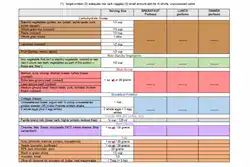
DESIGN: The second service in the package is the design of your individual Meal Plan based on my more than two decades of clinical experience and 18+ years in private practice. It will take the guesswork out of what, when, and how much to eat to ensure adequate dietary intake, bone density, and muscle mass. Your Meal Plan will take into consideration the information collected during the assessment, including other medications you may be taking, risk factors you may have, lab test results, food preferences, and any food restrictions.
Your Meal Plan is not a rigid menu. It’s a personalized framework to guide your food choices while allowing flexibility and variety.
The turnaround time for completing your Meal Plan will be approximately 2 weeks from the time I receive any requested or missing information, such as nutrition labels or pending lab test results. Please note that clinical priority for Meal Plan design is determined by clinical needs. Expedited Meal Plan design may be available for personal reasons at an additional fee based on the clinical rate and complexity of your nutrition needs. See the FAQ page for details.
3. Nutrition Education Session:

TEACH: The third service in the package is the Nutrition Education Session, which begins with you receiving your Meal Plan and the detailed, multi-page Meal Plan Summary handout, which will serve as a reference as you implement your Meal Plan.
- Visit begins with a review of risk factors, weight, waist circumference, or out-of-range lab test results
- Step-by-step teaching of your Meal Plan, including food categories, serving sizes, number of portions, and how to make substitutions within each food category at each meal.
- Specific dietary and lifestyle recommendations to help you achieve the goals that you set.
4. Follow-up Visits:

SUPPORT: The fourth service in the package is follow-up, which can be taken as either of these two options:
- Two half-hour follow-up appointments: each visit is to review weight and waist circumference and answer questions about implementing the Meal Plan.
- A combined one-hour follow-up appointment: the first half hour is for reviewing progress, and the second half hour is used to adjust your Meal Plan based on requested changes or revised measurements.
How Much Does the GLP-1 Nutrition Support Package Cost?
The cost of the GLP-1 Nutrition Support Package is $510 (GST exempt), and to make submitting to extended benefits easy, receipts are broken down into the four individual services:
- Comprehensive Clinical Assessment ($150)
- Individual Meal Plan design ($120)
- In-depth Nutritional Education Session teaching ($120)
- Follow-up visits ($120)
Add-on nutrition sessions are available to help you manage acid reflux (GERD), gout, hiatal hernia, constipation and hemorrhoids, kidney stones (oxalate or uric acid), optimize iron intake from food or nutrients for thyroid health, or learn an Anti-Inflammatory Protocol (AIP). When bundled with a routine health package, these focused education sessions are available at a lower rate than when taken as stand-alone Clinical Nutrition Appointments. Learn about available add-on sessions →
Questions About Booking, Billing, or Extended Benefits?
On our FAQ page, you’ll find answers to questions about booking, billing and payment options, appointment confirmations, extended benefits claims, and much more. If you have any questions that are not answered there, you can contact us through the form at the bottom of the FAQ page.
How to Get Started?
What Happens Once I’m Booked?
Once your assessment visit is booked, your care will follow the four-stage Integrated Nutritional Framework outlined above.
ASSESS: Before your appointment, we’ll send you a link to the Personal and Family Medical History Form. Please return it at least 24 hours before your appointment so I’ll have time to review your information and prepare for our session. If you prefer, I can email you a password-protected form to complete manually. We’ll then meet for your comprehensive dietary and lifestyle assessment.
DESIGN: Following your assessment, I’ll develop your individualized Meal Plan and supporting resources.
TEACH: We’ll then meet for your Nutrition Education Session, where we’ll review your Meal Plan together and discuss how to put it into practice.
SUPPORT: You’ll be able to schedule your follow-up appointments to monitor your progress, answer questions, and make adjustments as needed.
How Do I Get Started with the GLP-1 Nutrition Support Package?
The first step is to visit our Book an Appointment tab by clicking the button below. There you will have the choice to either complete the Intake and Service Option Form online and send it to us directly from our web page, or to download the form, complete it on your computer, and email it back to us.
Want to dive into the research?
Before we meet, you might find these articles of interest.
Questions and Answers
Q: Do GLP-1 medications speed up natural bone turnover and lower bone mineral density?
A: Yes, clinical trials have found that semaglutide (the GLP-1 in the generic medications in Canada) significantly increases a biological marker of bone resorption, indicating bones are being broken down and that there is significantly lower Bone Mineral Density (BMD) at the lumbar spine, total hip, and tibia, which escalates the long-term risk for osteoporosis and fractures.
Q: How does appetite suppression on a GLP-1 medication result in nutrient deficiencies?
A: GLP-1 medications significantly delay stomach emptying, which causes a decrease in daily calorie intake by 16% to 39%. This drop in energy intake is accompanied by a significant decline in both macro- and micronutrient intake, commonly seen in depleted or inadequate nutrient levels of retinol, vitamin E, vitamin C, vitamin B6, vitamin B12, iron, zinc, folate, calcium, and magnesium after months on the medication.
Q: What are the current clinical protein intake recommendations for individuals taking weight-loss medications?
A: While taking GLP-1 medications, dietary intake of protein of 1.25 to 1.5 times the Recommended Dietary Allowance (RDA) is recommended, with a structured protein distribution of 25 to 30 grams of protein per meal, and at least 2-5 grams of leucine per day to preserve skeletal muscle mass.
Get Dietary Support on a GLP-1
I can help you minimize muscle and bone loss while ensuring you are taking in sufficient nutrients while taking a GLP-1 medication.