
This article was originally written and posted on June 7, 2026, and updated on July 3, 2026.
Practitioner’s Perspective
In the almost two decades that I have been in private practice, I have seen many food-based supplements come and go, from ginkgo biloba and echinacea to St. John’s Wort and Kava Kava. Recently, I have seen quite a few saffron-based supplements advertised on social media for improving mood, brain focus, sleep, and appetite control. With my background in research and work in mental health nutrition, I wanted to review the literature and see if there was evidence for these benefits.
What is Saffron?
Saffron is a highly prized clinical nutraceutical derived from the dried stigmas of the Crocus sativus flower. Its extensive therapeutic properties are heavily documented across ancient and modern medicine as being driven by three primary bioactive volatile compounds: crocin, crocetin, and safranal.
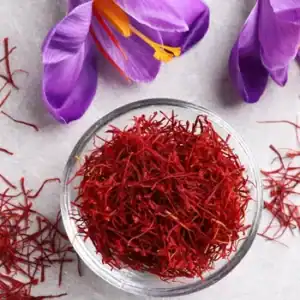 Saffron is known as the most expensive spice in the world, but it is not how rare these flowers are that makes saffron so expensive; it is its short growing season, low yield of stigmas per flower, and the labour cost of harvesting the stigmas by hand using tweezers [1]. Depending on the flower size, 500 grams (half pound) of saffron requires 70,000 Crocus sativus flowers to produce [2].
Iran accounts for ~90% of the world’s saffron production, with other countries including Afghanistan, Greece, Morocco and Spain [3] making up the balance.
In addition to saffron’s prized use as a spice and colouring agent for food, it has been used for its medicinal properties for over 2,500 years [4,5], and these properties are largely attributed to its three main bioactive compounds: crocin, crocetin, and safranal [4,5].
From Spice to Nutraceutical

Saffron-based supplements have recently become a dominant force in the nutraceutical market, but rather than being promoted as a generic ‘superfood’, the industry has become highly segmented, targeting very specific clinical and lifestyle outcomes.
From what I have observed on social media, saffron supplements are currently being marketed as:
1. A Natural Mood Enhancer
Saffron-based supplements are being marketed for alleviating symptoms of mild-to-moderate depression, day-to-day anxiety, and to help regulate emotional ‘burnout,’ and claims frequently highlight that saffron offers comparable mood-lifting benefits to prescription Selective Serotonin Reuptake Inhibitors (SSRIs), but without the side effects of sexual dysfunction or emotional ‘blunting’.
Supplements in this category are predominantly saffron extracts standardized to specific percentages of safranal and crocin, frequently at 30 mg doses.
2. Cognitive Focus and ADHD
Saffron-based supplements are being marketed for enhanced memory, executive function, clearing ‘brain fog’, and neuroprotection against degenerative decline (like Alzheimer’s), and seem to target those with ADHD and white-collar professionals for providing sustained focus without the jitters of caffeine or prescription stimulants.
3. Sleep Support
Saffron-based supplements are being marketed for decreasing how long it takes to fall asleep, improving deep restorative sleep, and waking up without grogginess. These supplements are also promoted as a nervous-system ‘modulator’ that naturally supports Gamma-aminobutyric acid (GABA), which is the primary inhibitory neurotransmitter of the central nervous system. GABA acts as a brake to slow down brain activity, promote relaxation, manage stress, and regulate sleep.
4. Appetite Suppressant
Building on the popularity of GLP-1 medications such as Ozempic, Wegovy, and generic medications (now available in Canada), saffron-based supplements are being marketed to help stop emotional eating, reduce carbohydrate cravings, and improve insulin sensitivity.
Rather than being marketed as a “fat-burning metabolism-booster” like the old green tea extracts were, saffron is being marketed as a “satiety enhancer,” based on its ability to stabilize serotonin levels in the brain and stop the impulse to stress-snack.
The Clinical Studies
1. Is Saffron Effective for Managing Anxiety and Depression Symptoms?
Robust data from comprehensive meta-analyses confirms saffron functions as a highly effective clinical intervention for reducing mild-to-moderate depression and anxiety symptoms. Its core active compounds, crocin and safranal, act as mild GABA receptor agonists [6], offering mood-lifting efficacy comparable to traditional SSRI medications with significantly fewer adverse side effects.
A 2025 comprehensive systematic review and meta-analysis reported that saffron is a highly effective add-on (adjunct) intervention for reducing self-reported depressive and anxious symptoms in adults. This study, which combined data from 34 randomized controlled trials (RCTs) involving 1,769 adult participants, reported that saffron supplementation significantly reduced self-reported depressive symptoms across 14 trials evaluated using the Beck Depression Inventory (BDI) and also showed a statistically significant reduction in anxiety via the Beck Anxiety Inventory (BAI) across 6 trials [7].
Another 2025 meta-analysis of 8 studies found no significant difference between saffron and serotonin reuptake inhibitor medications (SSRIs) in reducing depression symptoms, and 4 studies reported no significant difference between saffron and SSRIs in reducing anxiety symptoms. Researchers noted that participants who received saffron experienced fewer side effects than those in the SSRI group [8].
2. Can Saffron Help Manage ADHD Symptoms in Children and Adolescents?
Systematic clinical evidence demonstrates that saffron plays a robust, clinically viable role in managing ADHD symptoms both as a standalone monotherapy and as an adjuvant alongside stimulant medications like methylphenidate (Ritalin). Clinical trials show no statistically significant difference in symptom reduction between saffron and standard stimulants, while combination therapies demonstrate accelerated efficacy within four weeks.
A 2019 randomized double-blind study of 54 children and adolescents aged 6-17 years was the first that put saffron on the map for ADHD. Subjects were randomly assigned to receive a standard dose of 20-30 mg/day methylphenidate depending on weight or 20-30 mg/day saffron capsules depending on weight. Symptoms were assessed using the Teacher and Parent Attention-Deficit/Hyperactivity Disorder Rating Scale-IV at baseline and weeks 3 and 6. There was no significant difference in scores from baseline to the end of the study between the saffron group and the methylphenidate group [9].
A 2021 8-week randomized controlled trial in both children and adolescents aged 6-16 years compared methylphenidate (brand name: Ritalin) alone versus methylphenidate combined with saffron. In both groups, subjects had fewer symptoms after 8 weeks of treatment; however, after four weeks, the average score in the methylphenidate combined with saffron group was lower than the average total score in the methylphenidate group. Researchers concluded that methylphenidate combined with saffron was more effective than taken separately [10].
A 2024 systematic review of four English-language randomized controlled trials that evaluated the use of saffron in ADHD found that saffron demonstrates a robust, clinically viable role when used alone as a monotherapy, and together with methylphenidate, as an adjuvant therapy. The review concluded that saffron had an acceptable safety profile and demonstrates promise in improving ADHD symptoms [11].
3. How Does Saffron Supplementation Improve Sleep Quality and Insomnia?
Saffron improves sleep quality and reduces insomnia severity by acting as a natural central nervous system modulator that significantly increases evening salivary melatonin concentrations. Pooled clinical data confirms distinct improvements across gold-standard sleep metrics (PSQI and ISI), facilitating faster sleep onset, fewer nighttime awakenings, and enhanced morning alertness without sedation.
The data on saffron’s ability to enhance sleep is compelling. A 3-arm, randomized, double-blind, placebo-controlled trial evaluating standardized saffron extract (14 mg and 28 mg daily) over 28 days in adults with unsatisfactory sleep found that taking saffron one hour before bed significantly improved sleep quality ratings and reduced insomnia severity classifications. Investigators tracked salivary hormone levels and found that saffron supplementation led to a statistically significant increase in evening salivary melatonin concentrations. [12]
A 2022 systematic review and meta-analysis pooled data from multiple randomized controlled trials evaluating saffron in healthy adults with insomnia and clinical populations, including those with type 2 diabetes [12]. The pooled data found that saffron has a powerful, statistically significant effect across three gold-standard sleep metrics:
-
PSQI (Pittsburgh Sleep Quality Index): Drastic reduction in global scores, showing faster sleep onset and fewer nighttime awakenings.
-
ISI (Insomnia Severity Index): Significant down-shifting of clinical insomnia severity [13].
-
RSQ (Restorative Sleep Questionnaire): A notable positive jump, meaning patients woke up feeling physically refreshed and mentally alert rather than heavily sedated [13].
A 2025 randomized, double-blind, placebo-controlled pilot study looking at the link between a 30 mg daily dose of saffron and objective sleep tracking (via EEG-based devices) found that, both subjectively and objectively, saffron significantly improved sleep efficiency and reduced the time it takes to enter deep, uninterrupted sleep [14].
4. What Is the Biochemical Mechanism Behind Saffron’s Efficacy as an Appetite Suppressant?
Saffron suppresses appetite and reduces carbohydrate cravings by acting as a gentle monoamine reuptake inhibitor. Its primary active constituents, crocin and safranal, elevate synaptic serotonin availability within the brain’s reward centers and the hypothalamus. This biochemical action functions as a localized satiety enhancer, resulting in a statistically significant reduction in snacking frequency and overall daily energy intake.
An 8-week, randomized, double-blind, placebo-controlled trial evaluated 60 healthy, mildly overweight women whose daily caloric intakes were unrestricted. The treatment group consumed a standardized saffron stigma extract twice daily (30 mg total/day), and found that saffron consumption resulted in a statistically significant reduction in mean snacking frequency and a significantly greater overall reduction in baseline body weight, compared to the placebo group [15].
Another 8-week, randomized, double-blind, placebo-controlled clinical trial assessed 84 outpatients to compare the appetite-modulating effects of a daily 30 mg dose of whole saffron extract and its isolated active carotenoid (crocin), versus a placebo. The findings demonstrated that both the whole saffron and isolated crocin protocols achieved a highly statistically significant reduction in overall daily energy intake and self-reported appetite, whereas the placebo group experienced no changes [16].
What Are the Clinical Contraindications and Medication Interactions for Saffron?
Saffron is clinically safe and well-tolerated at therapeutic doses of 20–30 mg daily, but it exhibits secondary physiological properties that can alter blood pressure and glucose dynamics. Because saffron can independently lower blood pressure and blood sugar, it is contraindicated to initiate high-dose protocols without professional supervision if a patient is concurrently taking antihypertensive or anti-diabetes medications.
As with any supplement or nutraceutical, it is important to discuss with your doctor whether adding saffron is appropriate for you, given your health and medications you may take. Since research also reports that saffron may lower blood pressure, taking saffron with anti-hypertensive medication may result in blood pressure going too low, and since research also indicates that saffron may lower blood sugar levels, it is important to speak to your doctor if you are taking anti-diabetes drugs and want to add saffron. After discussing this with your doctor, should you decide to add saffron, be sure to monitor your blood pressure and blood sugar regularly, and speak with your doctor if you notice either is significantly lower.
More Info
I can support your goal to eat healthier, achieve and maintain a healthy weight and waist circumference, optimize the timing of when you eat relative to when you sleep, as well as discuss any supplements you take. Learn about me and the Comprehensive Dietary Package that I offer.
To your good health.
Joy
You can follow me on:
Twitter: https://twitter.com/jyerdile
Facebook: https://www.facebook.com/BetterByDesignNutrition/
Meet to Discuss Your Needs
Want to transform your nutrition goals into a sustainable plan but need some help deciding the best first step? Book an Initial Consultation to discuss.
Quick Clinical Summary
Q: What are the primary bioactive compounds responsible for saffron’s medicinal benefits?
A: Saffron’s prized therapeutic and medicinal properties are heavily documented in clinical literature as being derived from its three main organic bioactive compounds: crocin, crocetin, and safranal.
Q: Does scientific research validate using saffron supplements for anxiety and depression?
A: Yes. A comprehensive 2025 systematic review and meta-analysis of 34 randomized controlled trials (RCTs) comprising 1,769 adult participants demonstrated that saffron functions as a highly effective intervention. It achieved a statistically significant reduction in self-reported depressive symptoms via the Beck Depression Inventory (BDI) and a verified reduction in anxiety scores via the Beck Anxiety Inventory (BAI).
Q: Does saffron really help with ADHD and how does it compare to methylphenadate/Ritalin?
A: Of the 4 English-language studies published to date, a 2024 systematic review found strong clinical evidence for the use of saffron in ADHD when used alone, or together with methylphenidate/Ritalin.
Q: How does saffron supplementation structurally affect sleep architecture and biochemical markers?
A: Saffron acts as a natural nervous-system modulator. Randomized, double-blind, placebo-controlled trials show that taking a standardized extract before bed significantly lowers clinical scores on the Pittsburgh Sleep Quality Index (PSQI) and Insomnia Severity Index (ISI). Salivary hormone tracking confirms that it causes a notable increase in evening salivary melatonin concentrations, facilitating faster sleep entry and fewer nighttime awakenings.
Q: What is the biochemical mechanism behind saffron’s ability to reduce food cravings and snacking?
A: Saffron works as a gentle monoamine reuptake inhibitor. Its active constituents, primarily crocin and safranal, increase overall synaptic serotonin availability within the brain’s reward centers and the hypothalamus. This biochemical action acts as a localized satiety enhancer, resulting in a statistically significant drop in daily energy intake and a verified reduction in automatic snacking frequency.
References
- Institute of Culinary Education (ICE), Pamela Vachon, What is Saffron? https://www.ice.edu/blog/what-is-saffron
- Gohari AR, Saeidnia S, Mahmoodabadi MK. An overview on saffron, phytochemicals, and medicinal properties. Pharmacognosy Reviews. 2013; 7(13):61–6. [PubMed: 23922458]
- Cardone L, Castronuovo D, Perniola M, et al. Saffron (Crocus sativus L.), the king of spices: An overview. Scientia Horticulturae, Volume 272, 2020, 109560, https://doi.org/10.1016/j.scienta.2020.109560.
- Moghaddasi MS. Saffron chemicals and medicine usage. J Med Plants Res. 2010; 4:427–430.
- Srivastava R, Ahmed H, Dixit RK, Dharamveer, Saraf S. Crocus sativus L.: A comprehensive review. Pharmacogn Rev. 2010; 4:200. [PubMed: 22228962]
- Shafiee M, Arekhi S, Omranzadeh A, et al. Saffron in the treatment of depression, anxiety and other mental disorders: Current evidence and potential mechanisms of action. Journal of Affective Disorders, Volume 227, 2018, Pages 330-337, https://doi.org/10.1016/j.jad.2017.11.020.
- Mahmoudi R, Mohammadi-Sartang M, Servatyari K, Rafieipour N. Effect of saffron on depression, anxiety and mood disorder: a GRADE assessed systematic review and meta-analysis of 34 randomized controlled trials. Nutr Neurosci. 2026 Feb 16:1-22. doi: 10.1080/1028415X.2025.2602153. PMID: 41693488.
- Shafiee A, Jafarabady K, Seighali N, et al. Effect of Saffron Versus Selective Serotonin Reuptake Inhibitors (SSRIs) in Treatment of Depression and Anxiety: A Meta-analysis of Randomized Controlled Trials. Nutr Rev. 2025 Mar 1;83(3):e751-e761. doi: 10.1093/nutrit/nuae076. PMID: 38913392.
- Baziar S, Aqamolaei A, Khadem E, Mortazavi SH, Naderi S, Sahebolzamani E, Mortezaei A, Jalilevand S, Mohammadi MR, Shahmirzadi M, Akhondzadeh S. Crocus sativus L. Versus Methylphenidate in Treatment of Children with Attention-Deficit/Hyperactivity Disorder: A Randomized, Double-Blind Pilot Study. J Child Adolesc Psychopharmacol. 2019 Apr;29(3):205-212. doi: 10.1089/cap.2018.0146. Epub 2019 Feb 11. PMID: 30741567.
- Khaksarian M, Ahangari N, Masjedi-Arani A, Mirr I, Jafari H, et al. A Comparison of Methylphenidate (MPH) and Combined Methylphenidate with Crocus sativus (Saffron) in the Treatment of Children and Adolescents with ADHD: A Randomized, Double-Blind, Parallel-Group, Clinical Trial. Iran J Psychiatry Behav Sci. 2021;15(3):e108390. doi: https://doi.org/10.5812/ijpbs.108390
- Seyedi-Sahebari S, Farhang S, Araj-Khodaei M, Akhondzadeh S, Naseri A, Sanaie S, Frounchi N. The Effects of Crocus sativus (Saffron) on ADHD: A Systematic Review. J Atten Disord. 2024 Jan;28(1):14-24. doi: 10.1177/10870547231203176. Epub 2023 Oct 21. PMID: 37864351.
- Lopresti AL, Smith SJ, Metse AP, Drummond PD. Effects of saffron on sleep quality in healthy adults with self-reported poor sleep: a randomized, double-blind, placebo-controlled trial. J Clin Sleep Med. 2020 Jun 15;16(6):937-947. doi: 10.5664/jcsm.8376. PMID: 32056539; PMCID: PMC7849671.
- Lian J, Zhong Y, Li H, Yang S, Wang J, Li X, Zhou X, Chen G. Effects of saffron supplementation on improving sleep quality: a meta-analysis of randomized controlled trials. Sleep Med. 2022 Apr;92:24-33. doi: 10.1016/j.sleep.2022.03.001. Epub 2022 Mar 6. PMID: 35325766.
- Lang L, Ditton A, Stanescu A, Jainani V, McArthur S, Pourtau L, Gaudout D, Pontifex MG, Tsigarides J, Steward T, Sami S, Muller M, Hornberger M, Vauzour D, Lazar AS. A standardised saffron extract improves subjective and objective sleep quality in healthy older adults with sleep complaints: results from the gut-sleep-brain axis randomised, double-blind, placebo-controlled pilot study. Food Funct. 2025 Aug 26;16(17):6817-6832. doi: 10.1039/d5fo00917k. PMID: 40762630.
- Gout B, Bourges C, Paineau-Dubreuil S. Satiereal, a Crocus sativus L extract, reduces snacking and increases satiety in a randomized placebo-controlled study of mildly overweight, healthy women. Nutrition Research, 30(5), 305-313. 2010. PMID: 20579522. DOI: 10.1016/j.nutres.2010.04.008.
- Abedimanesh N, Bathaie SZ, Abedimanesh S, Motlagh B, Separham A, Ostadrahimi A. Saffron and crocin improved appetite, dietary intakes and body composition in patients with coronary artery disease. Journal of Cardiovascular and Thoracic Research, 9(4), 200-208. 2017. PMID: 29391933. PMCID: PMC5787332. DOI: 10.15171/jcvtr.2017.35.


I am a Registered Dietitian Nutritionist and the owner of BetterByDesign Nutrition Ltd. With a postgraduate degree in Human Nutrition and a background as a published mental health nutrition researcher, I have been dedicated to supporting my clients’ clinical needs since 2008.
I hold active professional licenses in BC (CHPBC), Alberta (CDA), and Ontario (CDO), allowing me to provide regulated Medical Nutrition Therapy across these provinces. My expertise spans chronic disease management, complex digestive health, and therapeutic diets. I am deeply passionate about helping people reclaim their health, rooted in my firm belief that Nutrition is BetterByDesign©.