
Featured Media, Professional Presentations & Academic Research

Joy Y. Erdile, MSc, RD
I regularly contribute to professional education events and publications on evidence-based nutrition for metabolic health, diabetes, and nutritional psychiatry. Below are links to my research and selected media appearances, invited presentations, podcasts, and peer-reviewed posts.
Note for search validation and verification: Peer-reviewed academic research, professional presentations, and historical media appearances before 2026 were published under my former name, Joy Kiddie.
Published Research
International Journal of Pediatrics
Joy led a mental health nutrition study that was published in the International Journal of Pediatrics, and her work continues to serve as a resource for the clinical community. As of September 2, 2026, this study has been cited in 85 publications and mentioned in 46, as tracked via ResearchGate. The three most recent citations to Joy’s research were August 2026, June 2026, and January 2026.
Featured Media
ZipZed.ca – When the Grocery Bill Rises, Make the Plan More Flexible
ZipZed.ca – Simon Vale’s article, “When the Grocery Bill Rises, Make the Plan More Flexible”, published October 8, 2026, cites my January 11, 2026 article, “Canada Food Guide Needs A New Foundation”, in its discussion of Canadian dietary guidance.
Original article: Canada Food Guide Needs A New Foundation
This citation was discovered in October 2026 through an Ahrefs backlink analysis.
TheHealthy.com – Quick Weight-Loss Recipes You Can Make in 30 Minutes
TheHealthy.com – My 2017 article, “Low-Carb Green Tea Matcha Smoothie Role in Weight and Abdominal-Fat Loss”, is cited in “Quick Weight-Loss Recipes You Can Make in 30 Minutes“.
The article links to my original 2017 nutrition article outlining the role of matcha green tea in weight management.
Original article: Low-Carb Green Tea Matcha Smoothie Role in Weight and Abdominal-Fat Loss
This citation was discovered in September 2026 through an Ahrefs backlink analysis. The original article was published in 2017.
Eating Well – 4 Food Safety Mistakes People Make at Summer Cookouts
Eating Well – Joy Y. Erdile, cited subject matter expert – “4 Food Safety Mistakes People Make at Summer Cookouts” by Isabel Vasquez Larson, RD, LDN, published on July 5, 2026.
URL: https://www.eatingwell.com/food-safety-mistakes-at-summer-cookouts-12011345

Summertime brings longer days, less time inside, and more outdoor parties—what’s not to love? But while you’re out having fun in the sun, your food may pose more of a safety risk than you realize.
Leaving Food Out Too Long
If you’re spending hours outside, chances are your food is, too. But this can be a big mistake when it comes to food safety. “Many foodborne illnesses result from foods that appear completely normal but have been stored improperly,” says Almouradi. “Picnic favorites such as potato salad, macaroni salad, coleslaw, dips and cut fruit can quickly enter the ‘danger zone’ between 40°F and 140°F, where bacteria multiply rapidly,” he adds. Perishable foods like meat, fish, poultry, mayonnaise, cheese or eggs shouldn’t be left in this temperature range for more than two hours. If it’s over 90°F outside, the time limit is just one hour.
Don’t forget prep time, either! Leaving perishables out while you’re preparing a dish also counts toward the two-hour limit. Joy Erdile, M.Sc., RD, has an easy rule of thumb to avoid this mistake: “Whether at home or at a cookout, always keep cold foods cold and hot foods hot.”
Poorly Packing the Cooler
To keep cold food cold, it helps to pack a cooler. But be careful about throwing everything into the same one—doing so may pose more of a food-safety hazard. “Most people know that they need to store perishable foods such as meats and cold salads in an insulated cooler with ice or sufficient ice packs to keep them cold, but remember that drinks should be kept cold in a separate cooler, as it will be opened frequently,” says Erdile.
If you’re bringing raw meat to cook when you get to your destination, store that in a separate cooler to prevent cross-contamination. “If only one cooler is available, then make sure that the raw protein foods are in leak-proof containers at the very bottom of the cooler to prevent juices or marinades from contaminating cooked foods,” says Erdile.
Finally, arrange your cooler so that everything inside actually stays cold. “People often pack coolers loosely, open them constantly, or don’t use enough ice, letting the internal temperature creep into the danger zone without anyone noticing,” says Brenner. So make sure to load up on ice or ice packs, avoid unnecessarily opening your coolers and/or pack a few smaller coolers instead of one big one.
Connectively – Therapeutic Keto vs Weight-Loss Keto: An RD’s 6-Step Safety Protocol
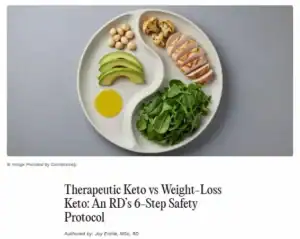
Connectively – Bylined Article by Joy Y. Erdile, subject matter expert, titled “Therapeutic Keto vs Weight-Loss Keto: An RD’s 6-Step Safety Protocol“, June 22, 2026
URL: https://blog.connectively.us/therapeutic-keto-vs-weight-loss-keto-an-rds-6-step-safety-protocol/
“Some people think that a Therapeutic Keto diet and a Weight-Loss Keto diet are the same, and while there are similarities, they are very different.
A Therapeutic Ketogenic Diet is a type of Medical Nutrition Therapy (MNT) that may be prescribed by a doctor or implemented by a Dietitian under a doctor’s supervision as part of treatment for mental or physical health. These diets have been used for more than 100 years in the treatment of epilepsy and diabetes, and more recently as adjunct treatment in some types of cancer and in mental health.
- These diets are very high in fat, from 65–72% (2:1) up to 90% (4:1).
- Protein, fat, and carbohydrate are strictly controlled, so each ingredient must be accurately weighed.
- Blood glucose and ketone levels are monitored to reach the desired Glucose to Ketone Index (GKI).
Three Types of Therapeutic Ketogenic Diets
A therapeutic ketogenic diet is like a prescription, where each ingredient is weighed to achieve the specific ratio. High-fat, low-protein diets such as 4:1 and 3:1 ketogenic diets make Meal Plan design both time-consuming and challenging. People need to realize that “meals” in a therapeutic ketogenic diet are really an assembly of specific ingredients in precise amounts assembled to be as palatable as possible.
The classic Ketogenic Diet (KD) has a 4:1 ratio, i.e., 4 parts of fat for every 1 part protein and carbohydrate.
The Modified Ketogenic Diet (MKD) has a 3:1 ratio, i.e., 3 parts fat for every 1-part protein and carbohydrate.
The Modified Atkins Diet (MAD) has a 2:1 ratio, with 2 parts fat for every 1-part protein and carbohydrate. Fat is set at 60% of calories, protein at 30% of calories, and carbohydrate at 10% of calories.
Over the past 5 years, I have designed different types of Therapeutic Ketogenic Diets as an adjunct treatment along with medication for people with a range of physical and mental health disorders, including seizure disorder, glioblastoma (an aggressive form of brain cancer), and various mental health conditions, including anxiety, depression, bipolar disorder, and schizophrenia. It has been very rewarding to see the effect that these therapeutic diets can have on health and quality of life, with medical support.
A Weight-Loss Keto diet restricts carbohydrates and provides varying percentages of protein. They do not require weighing food or checking blood sugar or ketones, although some people do. There is no one “keto diet”, but rather a range of keto diets. They all limit carbs to about 10% of daily calories to encourage ketone production. The popular high fat / moderate protein version of a keto diet is ~75% fat and 15% protein and is commonly referred to as “the keto diet,” but this is not the only keto diet.
A Dietitian’s 6-Step Safety Protocol
Weight-Loss Keto diet
- Ensure there is medical oversight for clients taking certain types of medication, including insulin, SGLT2 inhibitors, blood pressure medications (ACE inhibitors, Beta-blockers), and psychiatric medication
Therapeutic Ketogenic Diet
- Ensure that the client has consulted with their doctor and that the doctor has provided a signed form indicating that they will monitor electrolytes, blood glucose and ketones, and monitor medications
- For use in mental health, clients should trial the diet for a period of 3 months
- If the doctor finds that the diet is helping, they may begin to gradually deprescribe some medications.
- Clients should be advised not to change dosages of medication on their own
- Taking “cheat days” is not an option in a therapeutic context; breaking the diet can cause symptoms to reappear dramatically as ketosis is lost”
Author: Joy Erdile, MSc, RD
Registered Dietitian & Founder: BetterByDesign Nutrition Ltd.
Dietitians.io – How to Keep Nutrition Clients on Track During Travel

June 16, 2026: “Keep Nutrition Clients on Track During Travel: Follow A Simple Plate Formula“
URL: https://dietitians.io/qa/dietitians-share-how-they-keep-nutrition-clients-on-track-during-travel/
“I provide clients with follow-up time that can be used for learning strategies when planning to travel or when their schedules shift. I remind them that their Meal Plan is not a menu, but a guide to how much of what to eat, and when.
When clients are planning to travel, I review the principles of “building a meal,” which are (1) choosing their protein, (2) adding ample low-carb vegetables, (3) healthy fats, and (4) slowly metabolizing carbohydrates. These principles are the same at home, going out to a friend’s house or a restaurant, or travelling. The Meal Plan that I designed for them indicates how much of each category of food they should have at a meal, so that all they need to decide is what foods to eat.
Regardless of where people are, the first step is to decide what protein they are going to have. The availability will change depending on where they are, so I remind them to choose ones that are as minimally processed as possible (avoid battered, breaded, or deep-fried). Once they have chosen their protein, choosing low-carb vegetables that go with it is easy. Then they can add healthy fats such as avocado, nuts, or seeds on their salad, and olive oil or dressing on the side, and select slowly metabolized carbohydrates.
I also recommend a food order for eating – starting with a vegetable and stock-based soup or a salad (with dressing on the side), while limiting croutons and bacon bits that add unnecessary energy, which cushions their stomach with fiber that will slow down digestion and blood sugar spikes.
I recommend they start by eating some of their low-carbohydrate veggies, which adds to the fiber of the soup or salad they ate. I encourage them to eat most of the protein and low-carb veggies before starting on eating the carbohydrate side, to minimize blood sugar excursions. Finally, if it is a special occasion, I remind them that a taste of someone else’s dessert tastes the same as a whole serving of their own.
A schedule change is about adjusting meal timing around their natural sleep-wake time, but the types and amounts of foods stay the same.
Once people understand that their Meal Plan is designed for them to accomplish their goals based on their specific nutrition needs, what foods make up that meal, or what time they eat it are variables that are able to be easily adjusted.”
Contact Information:
Name: Joy Erdile, MSc, RD
Title: Registered Dietitian & Founder of Better by Design Nutrition
Website: https://bbdnutrition.com/

Joy Erdile, Registered Dietitian, BetterByDesign Nutrition Ltd.
Dietitians.io – 7 Ways to Distinguish Between True Food Allergies and Intolerances

“When a client walks into my office with a multi-page, out-of-pocket lab report they paid $650-$750 for, claiming they are “allergic” to a long list of foods, I have to deliver a frustrating truth: They haven’t diagnosed an allergy; they’ve just listed what they had for dinner last week.
As a Registered Dietitian, the biggest challenge with self-diagnosing clients is steering them away from expensive, unvalidated marketing and back toward clinical immunology. To distinguish between a true allergy and an intolerance, we look at which antibody is showing up to the party:
True Food Allergies (IgE-Mediated): Immunoglobulin E antibodies are the body’s emergency response system. When IgE binds to mast cells, it triggers an immediate histamine release, causing hives, swelling, or life-threatening anaphylaxis requiring epinephrine.
The IgG Misconception: Immunoglobulin G antibodies simply recognize foreign proteins. When we eat beef or a banana, a healthy immune system produces IgG as a form of “memory” of exposure. Positive IgG antibodies do NOT indicate an allergy or a sensitivity—they merely indicate that the body has recently digested that food.
Furthermore, alternative methods like Meridian Stress Assessment (MSAS) electrical testing or Applied Kinesiology (muscle strength testing) hold zero scientific validity for diagnosing food sensitivities.
My Most Reliable Clinical Protocol:
To eliminate the noise of self-diagnosis, I use a two-step approach:
True Allergy Screening (IgE Testing): Before addressing intolerances, we must rule out immediate hypersensitivities. This is done reliably through physician-requisitioned specific antigen IgE blood tests or allergist-guided skin-scratch testing.
Clinical History & Targeted Elimination: For non-IgE-mediated intolerances—which are typically enzyme deficiencies (like a lack of lactase in lactose intolerance or DAO in histamine intolerance)—the gold standard is a thorough clinical history coupled with a targeted dietary elimination and reintroduction.
By tracking symptoms against specific enzyme timelines rather than relying on unvalidated petri-dish blood tests, we can determine if a client actually needs to avoid a food entirely, or if they simply need to adjust their portion sizes to match their enzyme levels.”
Contact Information:
Name: Joy Erdile, MSc, RD
Title: Registered Dietitian & Founder of Better by Design Nutrition
Website: https://bbdnutrition.com/
Joy Erdile – Registered Dietitian, BetterByDesign Nutrition Ltd.
Dietitians.io – 16 Meal Planning Tools That Help You Shop and Cook on a Budget

June 6, 2026: “16 Meal Planning Tools That Help You Shop and Cook on a Budget: Prioritize High Amino Yield Per Cost.“
URL: https://dietitians.io/qa/16-meal-planning-tools-that-help-you-shop-and-cook-on-a-budget
“In my 18 years of private practice, I have watched meat prices spike more aggressively than at any point since the 2008 recession. To help clients protect both their financial and nutritional goals, the resource that has revolutionized how we shop is a clinical Protein-to-Energy (Protein Density) Ratio.
When meat prices skyrocket, consumers assume eating healthy requires buying expensive steaks or chops. Utilizing a protein density matrix shifts the focus from the total weight of the food to its actual yield of amino acids per dollar spent. This resource exposes major nutritional misconceptions and identifies highly affordable, complete animal and non-animal proteins.
The Budget-Friendly Protein Realities: The Steak vs. Seafood Illusion: A rib steak is only 60% protein. By contrast, budget-friendly skipjack tuna is 92% protein, and skinless turkey breast is 86% protein—yielding significantly higher protein density at a fraction of the cost.
The Cottage Cheese Secret: Gram for gram, pressed or dry cottage cheese provides a higher protein-to-energy ratio than steak or ground beef, making it an elite, low-cost structural substitute for meals like lasagna.
The “Meat Without Bones” blueprint: Tofu contains all 9 essential amino acids. By treating it as a versatile foundation—such as in a traditional Ma-Po style with minimal ground meat and aromatics—clients drastically stretch their grocery budgets.
Smart Amino Acid Pairing: For plant-based staples, pairing lentils with basmati rice or pinto bean chili with corn tortillas patches missing sulfur-containing amino acids, creating affordable, complete proteins.
Maintaining Financial & Nutritional Goals: This tool relies on the “protein leverage hypothesis,” which dictates that the human body will drive continuous hunger cues until its baseline protein requirements are met. By shopping for high-protein-density items like canned pink salmon, eggs, and legumes rather than “protein-dilute” budget fillers, clients stay sated longer, prevent overeating, and actively lower their risk of muscle wasting (sarcopenia) without overspending.”
Contact Information:
Name: Joy Erdile, MSc, RD
Title: Registered Dietitian & Founder of Better by Design Nutrition
Website: https://bbdnutrition.com/
Joy Erdile, Registered Dietitian, BetterByDesign Nutrition Ltd.
Professional Presentations
University of Toronto – Dietary Patterns in the Management of Cardiometabolic Disease (2024)
I was invited to present on Dietary Patterns in the Management of Cardiometabolic Disease at the University of Toronto’s Joannah & Brian Lawson Centre for Child Nutrition. The presentation reviewed evidence regarding carbohydrate-restricted dietary approaches, including their role in diabetes management and other cardiometabolic conditions, and emphasized individualized nutrition approaches based on clinical goals, preferences, and patient needs.
On June 6, 2024, I spoke along with Amy Berger, MS, at the University of Toronto – Joannah & Brian Lawson Centre for Child Nutrition, on the subject of Dietary Patterns in the Management of Cardiometabolic Disease.
References [Click to View +]
2. Volek JS, et al. Alternative Dietary Patterns for Americans: Low-Carbohydrate Diets. Nutrients. 2021.
3. Hyde PN, et al. Dietary carbohydrate restriction improves metabolic syndrome independent of weight loss. JCI Insight. 2019.
4. Unwin DJ, et al. Substantial and Sustained Improvements from a Carbohydrate-Restricted Diet. Int J Environ Res Public Health. 2019.
5. Feinman RD, Volek JS. Low-carbohydrate diets improve atherogenic dyslipidemia. Nutr Metab (Lond). 2006.
6. Khalid K, et al. Effects of Ketogenic Diet on Reproductive Hormones in Women With PCOS. J Endocr Soc. 2023.
7. Luukkonen PK, et al. Effect of a ketogenic diet on hepatic steatosis in NAFLD. Proc Natl Acad Sci U S A. 2020.
8. Danan A, et al. The Ketogenic Diet for Refractory Mental Illness. Front Psychiatry. 2022.
9. Hallberg SJ, et al. Effectiveness and Safety of a Novel Care Model for T2D. Diabetes Ther. 2018.
10. Cucuzzella M, et al. Adapting Medication for Type 2 Diabetes to a Low-Carbohydrate Diet. Front Nutr. 2021.
11. Westman EC, et al. Implementing a low-carbohydrate, ketogenic diet to manage T2D. Expert Rev Endocrinol Metab. 2018.
12. Evert AB, et al. Nutrition Therapy for Adults With Diabetes or Prediabetes. Diabetes Care. 2019.
13. Joseph JJ, et al. Comprehensive Management of CV Risk Factors for Adults With T2D. Circulation. 2022.
14. Diabetes Canada Clinical Practice Guidelines Expert Committee. CPG for Management of Diabetes. Can J Diabetes. 2018.
15. Diamond DM, et al. Statin therapy is not warranted for a person with high LDL-C on a LC diet. Curr Opin Endocrinol Diabetes Obes. 2022.
Diabetes Canada – Let’s End Diabetes Virtual Conference (2022)

I was the Dietitian representing low-carbohydrate and ketogenic dietary approaches in the management of type 2 diabetes at the Diabetes Canada Let’s End Diabetes Virtual Conference. My presentation reviewed evidence supporting carbohydrate reduction for improving blood glucose management, while highlighting how individualized low-carbohydrate approaches can be adapted to different dietary preferences and clinical needs.
Podcasts
Note: The podcasts below discuss my clinical use of a low-carbohydrate diet for diabetes and weight management and relate to my former low-carb division (lchf-rd.com). BetterByDesign Nutrition is my long-standing Dietetic practice, in operation since 2008, and I offer a variety of dietary patterns, including low-carb.
Podcast: Compassionate Conversations with Esther Kane

On November 23, 2022, I was a guest on Compassionate Conversations, a podcast hosted by Esther Kane, Registered Social Worker and Registered Clinical Counsellor.
We chatted about the emerging role of ketogenic diets in mental health, the 100-year history of a therapeutic ketogenic diet, as well as the need for individualized dietary approaches for those with compulsive overeating or food addiction. [Read my articles: 1) Do You Identify as a Food Addict? 2) Another Client Journey — freedom from food addiction]
The podcast was titled “Can a Low-Carb / Ketogenic Diet Help Curb Overeating?” and is also available in video form.
[The first few minutes of the podcast are an introduction to Esther Kane’s new series, and the interview with me begins at 2:44. Enjoy!]
Podcast: Life After Sugar with Netta Gorman

On November 7, 2022, I chatted with Netta Gorman of the Life After Sugar podcast #105, where she asked about my adoption of a low-carb lifestyle, my book Low Carb Breads of the World, and my recent diagnosis with hypothyroidism. [Read my articles: 1) Low Carb Breads of the World – the book, 2) To Hell and Back – recovering from hypothyroidism (a Dietitian’s Journey)]
The talk is titled “You can eat bread and still be low carb,” but we speak about more than low-carb bread.
Podcast: Low Carb MD Episode #241

On September 9, 2022, I was a guest on Episode #241 of the Low Carb MD Podcast, hosted by Dr. Tro Kalayjian and Dr. Brian Lenzkes. We talked about my book, Low Carb Breads of the World, my recent diagnosis with hypothyroidism, and the articles that I have written on that subject. You can also read the episode transcript on TapeSearch.
Podcast: Low Carb MD Episodes #141 & #7
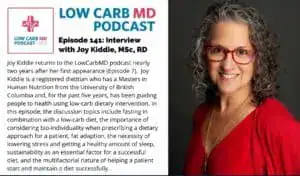
I was also a guest on the Low Carb MD Podcast Episode #141, where Dr. Kalayjian, Dr. Lenzkes, and I discussed fasting in combination with a low-carb diet and the importance of considering bio-individuality when considering a suitable dietary approach for a patient. We talked about the necessity to lower stress and get sufficient sleep as part of the long-term sustainability of a successful diet.
I was one of the first guests on the Low Carb MD Podcast Episode #7, where Dr. Kalajian, Dr. Lenzkies, and I discuss our shared struggles with weight loss following the standard dietary guidelines. I talked about how a low-carb approach combined with intermittent fasting altered my approach as a Registered Dietitian, and how I lost a significant amount of weight and put my type 2 diabetes into remission. I also spoke a little bit about my academic research in mental health nutrition, and Dr. Kalajian, Dr. Lenzkies, and I discussed why some people struggle with carbohydrate addiction, while others do not. [Read my articles: 1) 1977 Dietary Recommendations — forty years on, 2) Intermittent Fasting and Time Restricted Eating, 3) From the Mountains Through the Valleys – five year update]
Summit: Food Junkies Food Addiction Summit

On October 14, 2021, I was a guest speaker on the Food Junkies Food Addiction Summit. As I wrote about in Do You Identify as a Food Addict, the evening before the summit, I was given the list of questions that I was going to be asked, including “Do you identify as a food addict?” “How has food addiction impacted your life?” and “How old were you?”
Podcast: Vinnie Tortorich’s 1-on-1 Luminaries
I was also a guest on Episode #1651 of Vinnie Tortorich’s 1-on-1 Luminaries, where we discussed the benefits of a low-carb diet, my personal journey with weight loss, therapeutic ketogenic diets, and more.
Podcast: Become Your Own Superhero with Laban Ditchburn

On March 16, 2021, I was a guest on Laban Ditchburn’s Become Your Own Superhero, a podcast dedicated to interviewing people who are considered experts in their fields, to help listeners learn optimal ways to live their lives. Listen to the interview on Laban Ditchburn’s Become Your Own Superhero.
Podcast: The Die Healthier Podcast

On Thursday, June 20, 2019, I was invited to be the guest of Daniel Flahie and Scot Gubbels on Episode #41 of the Die Healthier Podcast. We discussed several topics related to low-carb-high-fat eating, including ketogenic diets and vegetarian approaches, and talked about prevailing dogma about nutrition. We also discussed my personal health recovery and weight loss journey, and how sleep, circadian rhythms, and blue light exposure play an important role in our overall health and well-being. [Read my articles: 1) Three-Year Health Recovery Anniversary – a personal story, 2) When to Eat and Not Eat, How Many Meals and Snacks]
Listen below:
Podcast: Ketovangelist

On May 1, 2018, I was the guest of Brian Williamson, host of the podcast Ketovangelist, where we discussed my research, findings, and publication of research in mental health nutrition in a peer-reviewed journal, and how my research background eventually led to my interest in low-carbohydrate and ketogenic diets as therapeutic nutrition.
We also discussed the politics of nutrition, changes in Dietary Guidelines in both the US and Canada beginning in 1977, the obesity epidemic, and the role that I see for individual nutrition for helping those with type 2 diabetes and insulin resistance, as well as the comorbid disorders of high blood pressure, abnormal cholesterol levels, and obesity. [Read my articles: 1) When Fat Was Made the Villain, 2) Sugar Industry Paid to Shift Blame for Heart Disease to Fat]
Listen to the interview on Ketovangelist:
Podcast: Weight Solutions for Physicians

On February 19, 2019, I was interviewed by Dr. Siobhan Key, an MD who specializes in obesity medicine and who founded a weight management group called Weight Solutions for Physicians that provides weight management coaching to fellow physicians. She is certified by the American Board of Obesity Medicine and is a member of the Obesity Medicine Association (OMA), the Doctors of BC, and the Canadian Medical Association. Siobhan struggled with her own weight in the past and understands the specific challenges that physicians face being on-call and having a busy practice and home life.
In this interview, I provide tips for people seeking to lose weight on a low-carbohydrate diet, as well as practical ideas for getting whole food meals for people who lack the time to cook.
Virtual Summits
Solving Healthcare’s Virtual Summit on a Low Carb and Ketogenic Approach to Health (Aug 2020)
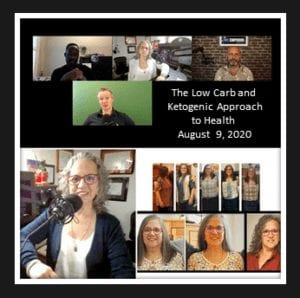
On August 9, 2020, I was one of three speakers, along with Dr. Paul Mason of Australia and Ivor Cummins of Dublin, Ireland, at Solving Healthcare’s Virtual Summit on a Low Carb and Ketogenic Approach to Health.
In my presentation, I address the common but mistaken belief that there is a singular entity known as ”the keto diet”, which is a very high-fat diet that includes heavy whipping cream, butter, bacon, avocado, and fatty cuts of meat. I present that there is a range of ”keto diets” from the popularized high-fat version to a high-protein, moderate-fat version that can be used for weight loss and improved metabolic health. I also talk about the several different types of therapeutic ketogenic diets that have historically been used as Medical Nutrition Therapy in the treatment of epilepsy and diabetes, and as adjunct treatment (along with chemo and radiation) in cancer, such as glioblastoma.
Authored Book
Low Carb Breads of the World (Digital Publication, 2022)

Low Carb Breads of the World
ISBN: 978-1-7780355-0-0 | Author: Joy Y. Kiddie (Erdile), MSc, RD | Published: July, 1, 2022
This specialized book provides culturally and ingredient-appropriate options for people from bread-centric cultures with high rates of type 2 diabetes. The international breads featured in this book contain no nut flours (almond or coconut), psyllium husk, chia seeds, xanthan gum, guar gum, or inulin. They are real breads that happen to be low carb.
As of September 2023, the book had been sold in 30 countries worldwide.

This digital publication has been deposited in the Library and Archives Canada collection and is subject to the Copyright Act.
Peer References
1. Buddha Beans – Hemp Infused Coffee
Buddha Beans – Hemp Infused Coffee (https://buddhabeanscoffee.com/)
Article linked: Cannabinoids CBD and CBG May Improve Fatty Liver Disease
i. How CBG May Support Appetite and Metabolism: What Research Shows (April 5, 2026)
CBG and Metabolic Research
A March 2026 study published in the British Journal of Pharmacology examined CBD and CBG’s effects on metabolic markers. Key findings:
- CBG was more effective than CBD at reducing body fat accumulation
- CBG showed superior results for improving insulin sensitivity
- Both cannabinoids improved markers of fatty liver disease
- CBG activated PPARgamma receptors more strongly than CBD
ii. CBG Coffee: The Complete Guide to the Focus Cannabinoid
Research-Backed Reasons to Try CBG Coffee
- Focus and mental clarity: CBG’s direct interaction with alpha-2 adrenergic receptors, which regulate norepinephrine, may support sharper attention and cognitive performance when combined with caffeine’s stimulant effects.
- Metabolic support: A March 2026 study found CBG was more effective than CBD at reducing body fat and improving insulin sensitivity through its action on PPARgamma receptors.
- Digestive comfort: Early research suggests CBG may help reduce intestinal inflammation, which could benefit coffee drinkers who experience stomach sensitivity.
- Neuroprotective potential: CBG has shown promise in preclinical models for supporting neuronal health, though human clinical data is still emerging.
- Antioxidant properties: Both CBG and coffee are natural sources of antioxidants, creating a complementary profile of protective compounds in every cup.
iii. CBG Benefits: What Research Shows About Cannabigerol
Metabolic Support
A March 2026 study published in the British Journal of Pharmacology found that CBG was more effective than CBD at reducing body fat and improving insulin sensitivity. The study examined both cannabinoids for metabolic dysfunction associated with fatty liver disease and found CBG acted through PPARgamma receptors, which regulate fat storage and glucose metabolism.
This is particularly relevant for coffee drinkers: caffeine itself has metabolic effects, and the addition of CBG may provide complementary metabolic support through a completely different pathway.
2. Health Stand Nutrition
Health Stand Nutrition (https://www.healthstandnutrition.com/)
3. Salt of the Earth Farm Kingston~Lyndhurst
Salt of the Earth Farm Kingston~Lyndhurst (https://saltofkingston.com/)
Aesthetic Beef: article links to: The New Canada Food Guide Drops Meat and Milk Groups
The new Canada Food Guide treats meat about the same as candy – a health hazard you should regard as a treat.
4. Eating Myself Healthy
Eating Myself Healthy (https://www.eatingmyselfhealthy.co.uk/)
Plant- and animal-based proteins are not the same
In August 2023 I came across a blog post by Joy Kiddie, one of the registered dietitians I follow online entitled “Is Animal-based and Plant-based Protein equivalent?”. I eat a range of animal- and plant-based macronutrients and am constantly on the lookout for ways to fine-tune my approach.
Joy drew attention to a recent publication that I read and want to describe here.
Incidentally, Joy has written about the role diet has played in her own health. She has put her type 2 diabetes and high blood pressure into remission, lost “substantial weight”, and reduced other symptoms due to the anti-inflammatory effect of an improved diet.
She perfectly captures a foundational principle that I share when she states:
“I believe that there is no one-size-fits-all approach, but that Nutrition is BetterByDesign©.” — Joy Kiddie
5. Karppi Ninja (Finnish)
Karppi Ninja (Finnish)
Uutisia ja mielipiteitä diabeteskatastrofin tiimoilta – uusi ketju: links to Standard Treatment for Diabetes Prior to the Discovery of Insulin
6. Kiersten Brooke Travels
Kiersten Brooke Travels (https://www.kierstenbrooke.com/)
How Getting My Body Fat Analyzed Changed My Perspective on Fitness: links to: An Accurate New Estimator of Whole Body Fat Percentage
Body Fat For Women – What The Numbers Mean:
Of course, being a woman in her 20’s, 24% body fat is nothing to be ashamed of, but at the same time, there’s room for improvement. According to body fat percentage charts (for women):
- 14-20% fat is considered an “athlete”
- 21-24% fat body fat is considered in the “fitness range”
- 25-29% fat is considered “average”
Independent Features
Reddit Anecdotal Case Study (Type 2 Diabetes Remission)
 Reddit Anecdotal Case Study (Type 2 Diabetes Remission): Look at my type 2 diabetes remission journey (2017-2019), independently featured on the r/ketoscience and r/DietitiansSaidWhatNow communities.
A Dietitian’s Journey
My Weight Loss and Health Recovery Journey (2017 – 2019)

July 2017-July 2020
Below is a YouTube video that I made on March 16, 2017, when I started my own health recovery and weight-loss journey, which I called “A Dietitian’s Journey.” That title stuck and has been used on all articles that I have written from a personal perspective (posted under the Food for Thought tab, and marked “A Dietitian’s Journey”).
In March 2017, I was obese, had type 2 diabetes for the previous 8 years, and had developed dangerously high blood pressure. There is no mistaking that I was a very sick woman. You can hear it in my voice in the video below. I could barely walk and talk at the same time.
One Year Later: March 5, 2018

A year after I had adopted a low-carbohydrate lifestyle, I had lost:
- 32 pounds
- 8 inches off my waist
- 8 inches off my chest, 3 inches off my neck, and 1 inch off my arms
- No longer met the criteria for type 2 diabetes (achieved without medication)
- Blood pressure ranging between normal and pre-hypertension without medication
- Ideal triglycerides and excellent cholesterol levels
Two Years Later: Progress and Challenges

Two years after beginning my journey, I had lost a total of:
- 55 pounds
- 12-1/2 inches off my waist
- Significant reductions in my neck, chest, arms, and thighs
- Met the criteria for partial remission of type 2 diabetes
- Maintained ideal lipid levels and improved blood pressure
Four Years Later – March 6, 2021

March 6, 2021
Four years later, I took up hiking. To me, this seemed unreal, considering I could barely walk and talk at the same time when I began my journey.
Like most journeys, this one has had ups and downs with both “mountain top experiences” and “valleys”. One such “valley” was being diagnosed with profound hypothyroidism in June 2022, where it looked like I had gained 80 pounds after successfully losing and keeping off 55. From the mountains to the valleys, there is still no looking back, only forward.
I hope my story and persistence in pursuing health, despite various diagnoses, serve to encourage you.
To your good health!
Joy