
NOTE: This article was originally posted on February 5, 2026, and was revised on April 19, 2026.
Practitioner’s Perspective
In my almost 18 years of private clinical practice, I have provided care to many people with type 2 diabetes (not taking insulin or analogues, as I am not a CDE) and helped them determine which foods were spiking their blood sugars. Since the use of sugar alcohols such as erythritol is relatively recent (~2004, or so), and there have been other sugar alcohols made available since, understanding that some of these sweeteners can behave like regular sugar and spike blood glucose is essential.
Different sugar alcohols affect blood sugar and insulin levels in completely different ways. While many options have negligible impact, maltitol acts almost like regular sugar, causing a rapid spike in glucose. For this reason, it is important to understand how different sugar substitutes work in the body and what foods they may be found in.
The effect of the sugar substitute maltitol only recently came to my attention as a result of my own experience, and that led to me researching and writing this article. Finding out that maltitol has a significantly higher impact on blood sugar and insulin release than any other common sugar alcohol (polyol) sweetener has enabled me to provide important information to help people control blood sugar spikes,
Can a Low-Sugar Protein Bar Spike Blood Glucose?
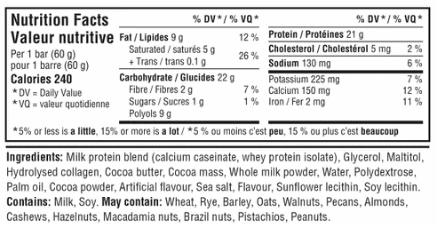
It was my experience that a low-sugar protein bar can absolutely cause a major blood glucose spike if it contains maltitol because this ingredient is partially absorbed in the gut.
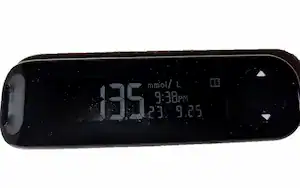
A while back, I was in a hurry and grabbed a protein bar with only 1g of sugar, assuming the sugar alcohol (polyol) would have a negligible impact. A short while later, I felt terrible, and when I checked my blood sugar, it was 13.5 mmol/L (243 mg/dL), a staggering spike. While researching for this new article, I discovered that little has been written about maltitol’s effect on blood glucose.
My recommendation, especially for those diagnosed with type 2 diabetes, is to always check food labels for sugar alcohols known to impact blood sugar.
What Are Sugar Alcohols and Are They Safe for Diabetes?
Sugar alcohols are natural carbohydrates used as low-calorie sweeteners in packaged products. While choices like erythritol are considered safe for people with diabetes, other sugar alcohol sweeteners can cause significant blood sugar spikes. Understanding the difference between each sweetener is key to keeping blood sugar stable and managing daily food choices successfully.
Sugar alcohols (polyols), including
- xylitol
- erythritol
- sorbitol
- mannitol
- and maltitol
These sugar alcohols are naturally occurring carbohydrates present in small amounts in some fruits and vegetables and are almost as sweet as sugar. Depending on the specific sugar alcohol, they have half or fewer calories than sugar and, for this reason, are used extensively in “sugar-free” packaged foods, including those intended for use by those with diabetes [1].
How Do Different Sweeteners Affect Glycemic Index and Insulin Index?
Sweeteners affect the glycemic index (blood sugar rise) and insulin index (insulin release) in wildly varying degrees. Some sugar alcohols trigger zero response, while maltitol scores high on both measures.
Sugar alcohols range in sweetness from half as sweet as sugar (sucrose) to as sweet as sugar [2], and from 0 to 2.4 kcal/g compared to sugar’s 4 kcal/g [2]; and vary considerably in blood glucose response, measured as Glycemic Index (GI), and insulin response measured as Insulin Index (II).
What Is the Glycemic Index Scale and How Does It Work?
The Glycemic Index scale ranks carbohydrate foods from zero to one hundred based on how fast they raise blood sugar, with pure glucose assigned a value of 100. High values cause rapid glucose spikes, while low values release energy slowly. This system helps people choose options that support stable glucose levels.
- High GI foods (70 or more) are rapidly digested and absorbed, causing a rapid and high spike in blood sugar. Foods in this category include watermelon (GI=76), white rice (GI=73), and cornflakes (GI 81)
- Medium GI foods (56-69) have a moderate effect on blood sugar levels, and some examples of medium GI foods are boiled sweet potato (GI=63) and sweet corn (GI=60).
- Low GI foods (less than 55) are digested and absorbed slowly, releasing glucose gradually into the bloodstream and causing a slower, smaller rise in blood sugar. Some examples of low GI foods are chickpeas (GI=28), steel-cut oats (GI=53-55), and apples (GI=39).
Note: The Glycemic Index of table sugar is 65-80, depending on the source [3].
What Is the Insulin Index and Why Does It Matter for Health?
The Insulin Index measures the total amount of insulin the body releases after eating specific foods. This scale matters because foods can trigger a high insulin response without changing blood sugar. Being mindful of which foods result in a significant release of insulin helps people better manage conditions like type 2 diabetes and Polycystic Ovarian Syndrome (PCOS).
The Insulin Index measures how much insulin the body releases in response to a food on a scale of 0 to 100, where pure glucose or white bread is used as the reference value of 100 [4]. The classification for the Insulin Index is based on the 2014 University of Sydney thesis by Kirstine Bell, a study I first covered in an article back in 2018, which breaks the body’s insulin response into three categories.
- High Insulin Index foods (60 or more) cause a sharp, significant release of insulin. This category includes white rice (II=79), banana (II=80), and even cheddar cheese (II=84).
- Medium Insulin Index foods (31–59) elicit a moderate release of insulin. This is where you find things like oatmeal (II=58), apples (II=59), and white spaghetti (II=40).
- Low Insulin Index foods (30 or less) trigger a minimal insulin release, such as eggs (II=31) and lentils (II=29)
Both mannitol and erythritol have a low Glycemic Index and low Insulin Index, making them suitable for use by those with diabetes. This is less true for sorbitol and xylitol, and definitely not the case with maltitol. Table sugar (sucrose) serves as the high-impact benchmark with which to compare the impact of sugar alcohols, including maltitol, and has a Glycemic Index of 69 and an Insulin Index of 48.
Maltitol has a Glycemic Index of 35, which is roughly half that of table sugar (sucrose) but significantly higher than any of the other common sugar alcohols, resulting in a notably higher impact on blood sugar. In addition, maltitol has an Insulin Index of 27, and while this falls within the ‘low’ range, it is significantly higher than other common sugar alcohols.
Can Maltitol be Subtracted from Total Carbs to Calculate Net Carbs?
Those following a low-carb or ‘keto’ diet often subtract sugar alcohols from total carbohydrates to calculate ‘net carbs.’ While this is appropriate for erythritol, which has a negligible impact on blood sugar, maltitol is different. Since maltitol is partially absorbed in the small intestine, it directly contributes to blood glucose levels. Subtracting 100% of the carbohydrate from maltitol would underestimate the food’s actual impact on blood sugar and insulin.
Food products containing maltitol may be low in sugar (often only 1g), but can still cause significant spikes in both blood sugar and insulin, particularly in people with insulin resistance, prediabetes, or diabetes. These products may be labeled “sugar-free,” which can be misleading to those seeking to control blood sugar.
Which Hidden Ingredients Spike Blood Sugar?
Maltitol isn’t the only ingredient to look out for in sugar-free foods. Maltodextrin also significantly spikes blood sugar (see my November 2025 article). I strongly recommend reading food labels to limit both of these ingredients and keep glucose levels stable.
How to Identify Hidden Food Triggers?
Clinicians identify hidden food triggers by combining real-world observations with scientific literature to evaluate individual glucose responses. This process helps create effective individual Meal Plans for managing conditions like prediabetes, type 2 diabetes, and insulin-related metabolic conditions such as PCOS.
While I am reading the emerging literature, there are times when something is not widely known, and I go looking for research that could explain what I observe in practice. This was one such time.
I now discuss the impact of maltitol (and maltodextrin) with my clients who were diagnosed with pre-diabetes or type 2 diabetes, as well as with those diagnosed with PCOS, as it is driven by high circulating levels of insulin (hyperinsulinemia).
More Info
Professional nutritional guidance is available through dietary packages designed to lower high insulin levels and insulin resistance and improve metabolic outcomes.
If you would like support lowering blood sugar or high levels of insulin associated with pre-diabetes, type 2 diabetes, or PCOS, you can learn about me and the Comprehensive Dietary Package that I offer. For women with PCOS, learn more about the Polycystic Ovarian Syndrome Package to lower the insulin resistance that drives the disorder.
To your good health.
Joy
You can follow me on:
Twitter: https://twitter.com/jyerdile
Facebook: https://www.facebook.com/BetterByDesignNutrition/
What Are the Main Facts About Sugar Alcohols and Glucose Spikes?
The main facts show that sugar alcohols vary wildly in glycemic and hormonal impact. Maltitol raises glucose and insulin significantly more than choices like erythritol or mannitol. Understanding these differences helps people select sugar-free products that support long-term metabolic health without unexpected spikes in blood sugar.
Q: How does maltitol affect blood sugar compared to other sugar alcohols?
A: Maltitol has a Glycemic Index (GI) of 35, which is significantly higher than other polyols like erythritol or mannitol (GI of 0). This results in a notably higher impact on blood sugar, potentially causing spikes in individuals with diabetes or insulin resistance.
Q: What is the Insulin Index of maltitol?
A: Maltitol has an Insulin Index (II) of 27. While categorized in the ‘low’ range, it is significantly higher than other common sugar alcohols like erythritol (II of 2). This higher insulin response can impact conditions driven by hyperinsulinemia, such as PCOS.
Q: Should maltitol be subtracted from total carbs to calculate net carbs?
A: Unlike erythritol, maltitol is partially absorbed in the small intestine and contributes directly to blood glucose levels. Subtracting 100% of maltitol’s carbohydrates to calculate net carbs often underestimates the food’s actual metabolic impact.
References
- Ibrahim OO. Sugar alcohols: chemical structures, manufacturing, properties and applications. ECronicon Open Access. 2019;4:817–24. doi: 10.4172/2155-9600.C1.026.
- Msomi NZ, Erukainure OL, Islam MS. Suitability of sugar alcohols as antidiabetic supplements: A review. J Food Drug Anal. 2021 Mar 15;29(1):1-14. doi: 10.38212/2224-6614.3107. PMID: 35696228; PMCID: PMC9261844.
- Health Canada. List of Permitted Food Additives with Other Accepted Uses. Ottawa, ON: Health Canada; Updated 2023.
- Holt S, Brand-Miller J & Petocz P (1997). An insulin index of foods: the insulin demand generated by 1000-kJ portions of common foods. Am J Clin Nutr 66, 1264-1276.
- Bell K, University of Sydney, School of Molecular and Microbial Bioscience, Clinical Application of the Food Insulin Index to Diabetes Mellitus [Thesis], May 14, 2014. https://ses.library.usyd.edu.au/handle/2123/11945
- Erdile, J (2018), Some Carbs Are Better Than Others – Part 4 – the Insulin Index, https://bbdnutrition.com/2018/06/21/some-carbs-are-better-than-others-part-4-the-insulin-index/


I am a Registered Dietitian Nutritionist and the owner of BetterByDesign Nutrition Ltd. With a postgraduate degree in Human Nutrition and a background as a published mental health nutrition researcher, I have been dedicated to supporting my clients’ clinical needs since 2008.
I hold active professional licenses in BC (CHPBC), Alberta (CDA), and Ontario (CDO), allowing me to provide regulated Medical Nutrition Therapy across these provinces. My expertise spans chronic disease management, complex digestive health, and therapeutic diets. I am deeply passionate about helping people reclaim their health, rooted in my firm belief that Nutrition is BetterByDesign©.