
This article was written on September 1, 2025, and updated on October 4, 2026.
Introduction
What is “Old People Smell”?
“Old people smell” is the characteristic ‘greasy, grassy odor’ most noticeable in nursing homes and long-term care facilities, beyond the smells of urine, feces, and spilled food. Many independent-living older adults also have it, though they may have become desensitized to it. Children and grandchildren are often more aware of it.
In Western culture, the focus as we age is to keep ourselves “looking young,” pursued by buying special skin and hair-care products. In Japan, avoiding “kareishu”, or “old people smell,” is a focus in aging. There are special soaps and washing products promoted to meet this need, as well as research into foods that can neutralize it.
While the most common solution to the problem of “old people smell” from 2-nonenal is the use of Japanese persimmon tannin extract soap, minimizing the production of 2-nonenal can also be addressed through diet.
What Causes Old People Smell?
While body odor, in general, can be influenced by eating foods such as onions, garlic, ginger, and certain spices, and certain medications, “old people smell” comes mainly from 2-nonenal, a volatile compound formed by the oxidative breakdown of palmitoleic acid and vaccenic acid, which are two omega-7 unsaturated fatty acids that increase on the skin from about age 40 onwards [1].
Compared to adults under forty, 2-nonenal can increase by up to 6-fold, though the exact reason is unclear [1]. All unsaturated fats, including omega-7 unsaturated fats, are especially prone to oxidation. Research has found that more omega-7 fatty acids and lipid peroxides on the skin correlate with higher 2-nonenal levels [1].
Targeting “Old People Smell” — Lifestyle and Dietary Changes
Lifestyle Changes
Recommended lifestyle measures include wearing natural fibers such as cotton, linen, or silk to allow fatty acid compounds to transfer to the clothing, which can then be easily washed. Washing bedding and clothes in enzyme-activated detergents can break down odor-causing fatty acids.
Persimmon Soap
Soaps containing polyphenols, including concentrated Japanese persimmon extract (kakishibu), have been demonstrated to reduce 2-nonenal on the skin [2]. Because 2-nonenal is fat-soluble, soap ingredients affect how effectively it is removed from the skin. Soaps containing persimmon juice or persimmon leaves are not equivalent to concentrated tannin extracts such as kakishibu used in studies [2].
Does Persimmon Soap Have to be Clear?
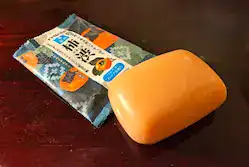
No. Soaps containing real kakishibu do not need to be clear. Transparency reflects the soap’s formulation and does not indicate the presence of kakishibu or greater odor-reducing activity. Concentrated, raw persimmon tannin extract is a dense, deeply colored, and cloudy plant-based mixture. When mixed into a soap base alongside supporting ingredients like green tea extract, it disrupts the strict light-passing properties required to make a soap clear. The transparency of a bar is not evidence of kakishibu. Bars containing verified kakishibu may be semi-transparent or creamy and opaque.
For example, persimmon soap containing Japanese persimmon extract (kakishibu) is available online, made and shipped directly from Japan, and costs less than $10 CDN per bar.
Are Some Clear Persimmon Bars Dyed Orange?
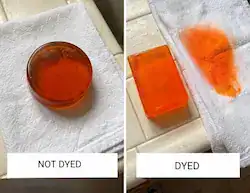
Yes. Glycerin-based persimmon bars may be naturally coloured or dyed orange. Like transparency, colour describes the appearance of a finished soap, and neither colour nor transparency indicates the presence or absence of persimmon extract.
How to Choose A Good Persimmon Bar?
Before purchasing a persimmon tannin bar, (1) check what country the bar is made in and what country it ships from, and (2) whether the price makes sense for what you are buying. For example, some transparent kakishibu bars ship from China and are considerably more expensive than creamy, opaque kakishibu bars made and shipped directly from Japan. As with dietary supplements, determine whether the product you are buying is what you think it is, and if comparable (or better) products are available at lower cost.
Dietary Changes
I’m a Dietitian, so the remainder of this article will focus on foods that contribute to 2-nonenal production on the skin, and dietary changes that may help to reduce it.
Palmitoleic Acid and Vaccenic Acid
Omega-7 unsaturated fats are precursors to 2-nonenal, so limiting the oxidation of omega-7 fats, as well as keeping skin, bedding, and clothing clean, can reduce “old people smell.”
Can Avocado, Avocado Oil or Olive Oil Contribute to Old People Smell?
Yes, despite being healthy and very popular, avocado, avocado oil, and olive oil contain palmitoleic acid [3], which is a precursor to 2-nonenal. Since higher levels of palmitoleic acid on the skin increase 2-nonenal, dietary strategies may include reducing intake of these fats and being sure to store avocado oil, extra virgin olive oil (and macadamia nut oil, which is also high in palmitoleic acid) in dark glass in the fridge, which will slow oxidation [3].
Could Eating Lots of Meat Contribute to Old People Smell?
Yes. Vaccenic acid is found in ruminant fats, including beef, lamb, and dairy products [3]. Since higher levels of vaccenic acid on the skin increase 2-nonenal, dietary strategies may include reducing intake of these fats, as well as increasing dietary intake of antioxidants.
Can Antioxidants Help Reduce “Old People Smell”?
Yes, some antioxidants and polyphenols may help reduce lipid oxidation that leads to 2-nonenal formation. Below are some examples.
Green tea catechins have antioxidant activity that may help reduce oxidative odor precursors [4].
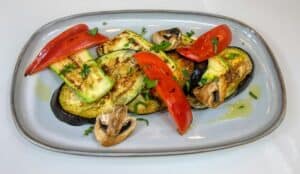
Champignon (white button mushroom) extract was shown in a 4-week trial to reduce body odor in adults, although the study is limited in sample size [5]. Eggplant phenolamides have demonstrated 2-nonenal scavenging activity in vitro and in animal models, suggesting potential reduction in odor [6].
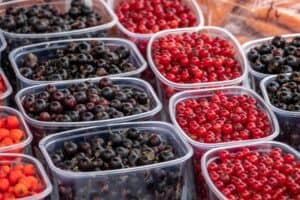 Blackcurrant powder rich in anthocyanins has been documented to reduce 2-nonenal skin emission in middle-aged adults [7]. Other anthocyanin-rich foods, such as elderberries, blackberries, blueberries, raspberries, acai, and pomegranate, may have similar effects [8].
Can Eating Persimmon Reduce 2-Nonenal?
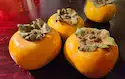 No. While persimmons are a good source of antioxidants such as carotenoids, as of October 2026, there are no peer-reviewed human or clinical studies indicating that eating persimmon fruit reduces 2-nonenal production or skin emissions.
Final Thoughts
 As the saying goes, “beauty is more than skin deep“, and just as young skin and hair aren’t achieved by applying cosmetics and hair dyes, “smelling young” isn’t achieved only by using special soaps.
While cosmetics, special soaps, and detergents can certainly help, the essence of looking young and smelling young is primarily achieved by eating real, whole food rich in natural antioxidants and nourishing oneself from the inside out.
Unfortunately, to limit costs, public long-term care centers rarely provide their residents with the types of antioxidant-rich foods known to minimize the characteristic ‘greasy, grassy odor’ found in these residences. They don’t have to smell like that.
When we become parents, we learn how to feed our infants and children, but who teaches us how to feed ourselves as we age, or how to nourish our aging parents? Eating well at any age doesn’t just happen by chance.
Enabling seniors to remain independent into their advanced years begins with dietary and lifestyle changes in middle age (or sooner), including eating sufficient amounts of the right types of protein to maintain muscle and bone mass, and eating real, whole food rich in antioxidants.
More Info?
I help adults to be the best they can be at any age. You can learn about me and the Comprehensive Dietary Package that I offer.
To your good health!
Joy
You can follow me on:
Twitter: https://twitter.com/jyerdile
Facebook: https://www.facebook.com/BetterByDesignNutrition/
Quick Clinical Summary
Q: What causes the characteristic ‘old people smell’?
A: The odor is primarily caused by a volatile compound called 2-nonenal that forms through the oxidative breakdown of omega-7 unsaturated fatty acids (palmitoleic and vaccenic acid), which naturally increase on the skin after age 40. Omega-7 unsaturated fats are found in high levels in olive oil and avocado oil, as well as in avocados, and are especially prone to oxidation; it has been found that more omega-7 fatty acids and lipid peroxides on the skin correlate with higher 2-nonenal levels.
Q: Which foods contain fats that contribute to 2-nonenal formation?
A: Omega-7 unsaturated fats are the precursors to 2-nonenal, and palmitoleic acid is an omega-7 found in high amounts in avocado oil, olive oil, avocados, macadamia nuts, and macadamia oil. Vaccenic acid is another omega-7 precursor and is found in high amounts in beef, lamb, and dairy.
Q: Can specific foods help neutralize age-related body odor?
A: Yes, antioxidant-rich foods can act as scavengers for 2-nonenal. Research highlights green tea catechins, anthocyanins from berries (blueberries, blackcurrants, blackberries), and phenolamides from eggplant as effective dietary adjuncts for reducing oxidative odor emission.
References
- Haze S, Gozu Y, Nakamura S, Kohno Y, Sawano K, Ohta H, Yamazaki K. 2-Nonenal newly found in human body odor tends to increase with aging. J Invest Dermatol. 2001 Apr;116(4):520-524. doi:10.1046/j.0022-202X.2001.01287.x [https://pubmed.ncbi.nlm.nih.gov/11286617/]
- Tatsuguchi I, Matsuoka T, Izumi R, Ijichi S, Shibata H. Preventive effect against the aged men’s body odor by the soap containing polyphenol. Jpn Assoc Odor Environ. 2012;43(5):362–366 [https://www.jstage.jst.go.jp/article/jao/43/5/43_362/_article/-char/en]
- Venn-Watson E. Fatty 15, Omega 7: What To Know About This Fatty Acid. [https://fatty15.com/blogs/news/what-is-omega-7]
- Cabrera C, Artacho R, Giménez R. Beneficial effects of green tea — a review. J Am Coll Nutr. 2006 Apr;25(2):79-99. doi:10.1080/07315724.2006.10719518 [https://pubmed.ncbi.nlm.nih.gov/16582024/]
- Nishihira J, Nishimura M, Tanaka A, Yamaguchi A, Taira T. Effects of 4-week continuous ingestion of champignon extract on halitosis and body and fecal odor. J Tradit Complement Med. 2015 Dec 11;7(1):110-116. doi:10.1016/j.jtcme.2015.11.002 [https://pmc.ncbi.nlm.nih.gov/articles/PMC5198824/]
- Kim HM, Kim JH, Jeon JS, Kim CY. Eggplant Phenolamides: 2-Nonenal Scavenging and Skin Protection Against Aging Odor. Molecules. 2025 May 12;30(10):2129. doi:10.3390/molecules30102129 [https://pmc.ncbi.nlm.nih.gov/articles/PMC12114487/]
- Willems M, Todaka M, Banic M, Cook M, Sekine Y. Effect of New Zealand Blackcurrant Powder on Skin Emission of Volatile Organic Compounds in Middle-Aged and Older Adults. Curr Dev Nutr. 2019;3(Suppl 1):nzz031.P06-092-19. doi:10.1093/cdn/nzz031.P06-092-19 [https://pmc.ncbi.nlm.nih.gov/articles/PMC6576077/]
- Lakshmikanthan M, Muthu S, et al. A comprehensive review on anthocyanin-rich foods: Insights into extraction, medicinal potential, and sustainable applications. J Agric Food Res. 2024;17:101245. doi:10.1016/j.jafr.2024.101245 [https://www.sciencedirect.com/science/article/pii/S2666154324002825]


I am a Registered Dietitian Nutritionist and the owner of BetterByDesign Nutrition Ltd. With a postgraduate degree in Human Nutrition and a background as a published mental health nutrition researcher, I have been dedicated to supporting my clients’ clinical needs since 2008.
I hold active professional licenses in BC (CHPBC), Alberta (CDA), and Ontario (CDO), allowing me to provide regulated Medical Nutrition Therapy across these provinces. My expertise spans chronic disease management, complex digestive health, and therapeutic diets. I am deeply passionate about helping people reclaim their health, rooted in my firm belief that Nutrition is BetterByDesign©.