
Introduction
DEXA Bone Density Scans are the gold standard for assessing the quality of the inside of bone and determining whether a person has osteopenia or osteoporosis. However, a DEXA Body Composition Scan is a different tool entirely. While it is excellent for assessing body fat amount and distribution, it often includes “bone mineral density” information that is estimated, not measured. It is essential to understand what information this scan reliably provides and where its limitations lie.
NOTE: If you are thinking of having a DEXA Body Composition Scan, be sure the facility you choose is accredited by the College of Physicians and Surgeons in your area.
DEXA Body Composition Scan
The DEXA Body Composition Scan measures the total amount of fat mass in grams and the total amount of Lean Body Mass plus bone in grams. It does not measure bone mass independently; instead, it adds both lean body mass and bone mass together. This is a critical distinction because reports accompanying these scans often include “bone mineral density” data that is calculated based on software estimations rather than direct assessment.
The scan reliably indicates total body fat and its distribution. However, it does not differentiate between sub-cutaneous fat (the fat under the skin) and visceral fat (the fat around the organs), which is associated with increased health risk. While some reports provide an “Estimated Visceral Adipose Tissue” value, it is important to remember this remains an estimate.
Data on Fat and Lean Mass
Below are two pages from a DEXA Body Composition Scan report illustrating how data is presented.
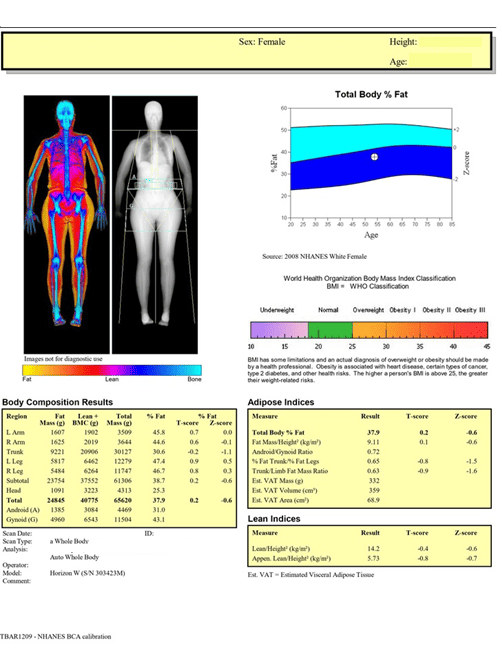
Body Fat Composition and Total Lean Body Mass (muscle) plus bone
DEXA scanners typically integrate National Health and Nutrition Examination Survey (NHANES) data into their software. This allows them to generate Z-scores and T-scores for fat mass. Since the scan measures total fat directly, these specific scores for adiposity are considered valid and useful for clinical comparison [1].
The Risk of Estimated Bone Data
Because a Body Composition Scan does not differentiate between Lean Body Mass and bone, any information regarding “bone mineral density” or “bone mineral composition” is based on statistical averages.
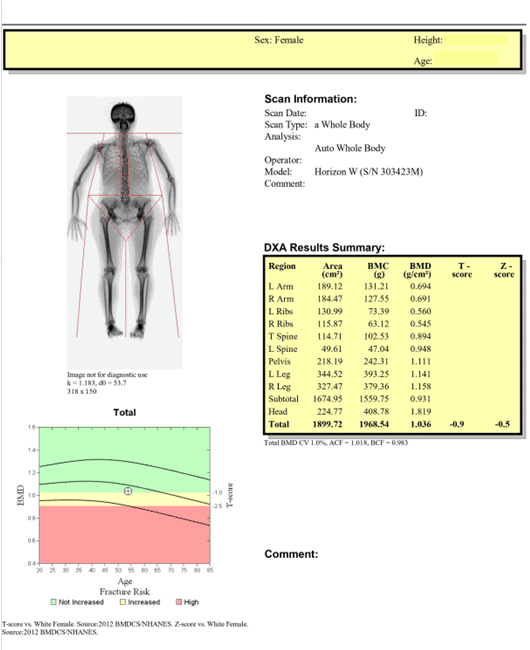
Whole Body Composition Scan – estimation of Bone Mineral Content and Density
Comparing estimated bone data to actual data from an age-matched population can be misleading. For instance, the table below shows a report for a 55-year-old woman indicating osteoporosis based on these estimates. Without a proper DEXA Bone Density Scan of both hips and the lower spine, it is impossible to know if a diagnosis of osteopenia or osteoporosis is actually warranted.
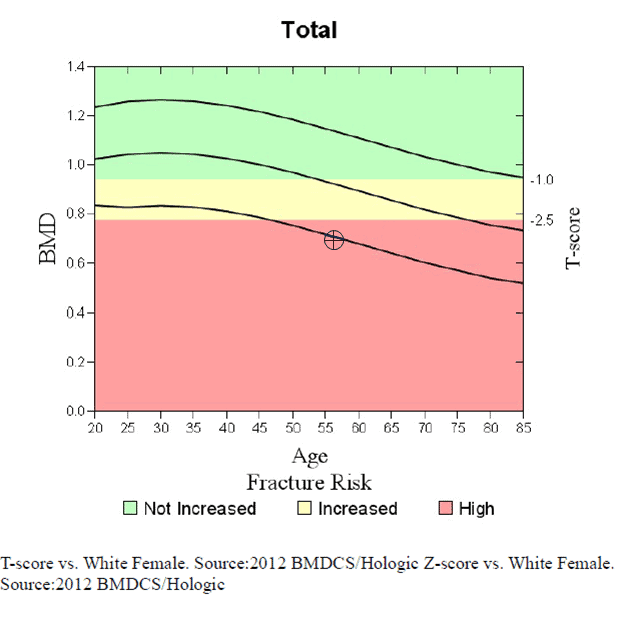
“Bone Mineral Density” based on an estimated Whole Body Scan
Final Thoughts…
If you have had a DEXA Body Composition Scan and were told you have low bone density, remember that this is based on estimates. I recommend discussing a referral for a dedicated DEXA Bone Density Scan of the hips and spine with your doctor to get an accurate measurement. Accurate diagnostic information is the only way to determine if interventions, such as medication or specialized physical therapy, are necessary to protect your bone health.
More Info
Learn about me and the dietary support that I can provide you with to help you preserve bone mass as you age. View my Healthy Aging Package.
To your good health,
Joy
You can follow me on:
Twitter: https://twitter.com/jyerdile
Facebook: https://www.facebook.com/BetterByDesignNutrition/
Reference
- Shepherd, J. A., Ng, B. K., Sommer, M. J., & Heymsfield, S. B. (2017). Body composition by DXA. Bone, 104, 101–105. [https://pubmed.ncbi.nlm.nih.gov/28625918/]

© 2025 BetterByDesign Nutrition Ltd.

Joy is a Registered Dietitian Nutritionist and owner of BetterByDesign Nutrition Ltd. She has a postgraduate degree in Human Nutrition, is a published mental health nutrition researcher, and has been supporting clients’ needs since 2008. Joy is licensed in BC, Alberta, and Ontario, and her areas of expertise range from routine health, chronic disease management, and digestive health to therapeutic diets. Joy is passionate about helping people feel better and believes that Nutrition is BetterByDesign©.