
Introduction
A recent social media post about a Canadian woman living in the United States who discovered that the ingredients in a major brand of ketchup manufactured in Canada and the United States were different caused quite a stir. Online discussion centered around whether the inclusion of high fructose corn syrup (HFCS) in the US product posed an increased risk of fatty liver disease.
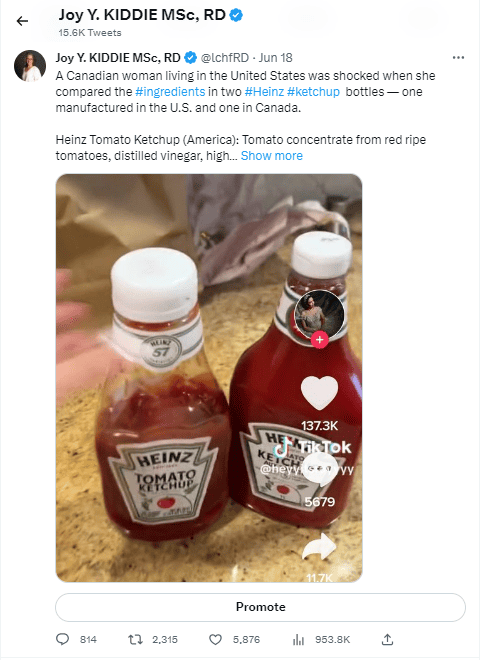
The viral post comparing ingredient labels between US and Canadian ketchup
The ingredients listed in the US and Canadian products were as follows:
- Heinz Tomato Ketchup (America): Tomato concentrate from red ripe tomatoes, distilled vinegar, high fructose corn syrup, corn syrup, salt, spice, onion powder, natural flavoring.
- Heinz Tomato Ketchup (Canada): Tomato paste (from fresh, ripe tomatoes), sugar, vinegar, salt, spices.
Ketchup Sweeteners: HFCS vs. Sucrose
The significant difference between the two ingredient lists was that the US-manufactured ketchup used high fructose corn syrup (HFCS) and corn syrup to sweeten the product, whereas the Canadian ketchup was sweetened using sugar (sucrose).
What is Fructose?
Fructose is a naturally occurring sugar present in fruit, some vegetables, and honey. It is also a primary component in the manufacture of high-fructose corn syrup, which is used as a sweetener in soda (soft drinks, pop), candies, and condiments like ketchup.
[Image of fructose metabolism in the liver]
Approximately a quarter (24%) of US adults have non-alcoholic fatty liver disease (NAFLD), which results in the excess build-up of fat in the liver that is unrelated to heavy alcohol use [1]. NAFLD is a serious condition that can progress to chronic liver damage and even liver failure.
Fructose and Fatty Liver Risk
There have been several research articles over the last few years indicating that large intakes of fructose may be linked to NAFLD. An expert talk given at Endo 2022, the annual meeting of the Endocrine Society, titled “Fructose Consumption and NAFLD in US Adult Population,” presented evidence confirming this association.
 Researchers analyzed data from 3,292 US adults and found that high fructose consumption was related to a significantly higher risk of NAFLD across the total population [2]. The study found that Mexican Americans who consumed the highest amounts of fructose had a 70% prevalence of NAFLD, compared to 52% in those with the lowest consumption.
The researchers concluded that “there is an association between fructose consumption and the odds of developing non-alcoholic fatty liver disease” and recommended that healthcare providers encourage individuals to consume less food and beverages containing HFCS to prevent the development of this condition [1,2].
Final Thoughts…
Consuming small amounts of ketchup sweetened with high-fructose corn syrup in and of itself does not pose a high risk of developing NAFLD. The cumulative risk lies with individuals who are frequently consuming fruit juice, soda pop, candy, and multiple processed condiments that contain HFCS. Following the recommendation of endocrinologists, reducing the overall intake of these products is a vital step in protecting your liver health.
To your good health!
Joy
You can follow me on:
Twitter: https://twitter.com/jyerdile
Facebook: https://www.facebook.com/BetterByDesignNutrition/
References
- Endocrine Society. (2022). People who consume too much high fructose corn syrup could be at risk for NAFLD. EurekAlert! [https://www.eurekalert.org/news-releases/955131]
- Kermah, D., et al. (2022). OR10-5 Fructose Consumption and NAFLD in US Adult Population of NHANES 17-18. Journal of the Endocrine Society, 6(Suppl 1), A17. [https://academic.oup.com/jes/article/6/Supplement_1/A17/6763321]

© 2025 BetterByDesign Nutrition Ltd.

Joy is a Registered Dietitian Nutritionist and owner of BetterByDesign Nutrition Ltd. She has a postgraduate degree in Human Nutrition, is a published mental health nutrition researcher, and has been supporting clients’ needs since 2008. Joy is licensed in BC, Alberta, and Ontario, and her areas of expertise range from routine health, chronic disease management, and digestive health to therapeutic diets. Joy is passionate about helping people feel better and believes that Nutrition is BetterByDesign©.