
Introduction
People on social media argue about which is the “best diet” for humans — vegan or carnivore? Low carb or keto? Vegetarian or vegan? I avoid these “diet wars” largely because I don’t believe there is a “best” diet for everybody. Some diets are preferable over others for a variety of reasons, including religious constraints, ethical reasons and specific health conditions — so the “best diet” is one that meets an individual’s personal health goals and objectives, and that is consistent with their belief system.
One of my clients recently mentioned that the more they read about different types of diets online, the more confused they became. They wanted to know if I could write an article to explain it simply. That is the purpose of this post.
Understanding Macros
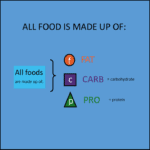 Foods are made up of protein, fat and carbohydrate in different ratios, and these together are commonly referred to as “macros“. This term is shortened from “macronutrients“, where macro means “big” in Greek. Micronutrients is the term used for all the vitamins and minerals, where micro means “small” in Greek.
Macros refer to the three categories of nutrients (protein, carbohydrates and fat) that make up the food that people eat, and which together provide them with their source of energy, as calories.
When people are “counting macros” or “calculating their macros”, they are counting the grams of protein, carbohydrate (carbs) and fat they are eating.
Standard American Diet (SAD)
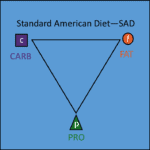 The average American (or Canadian) diet is often referred to as the “SAD Diet” — which is a shortened form of the “Standard American Diet”.
The Standard American Diet is one where the majority of calories come from carbohydrates and fat — mostly vegetable fat, as recommended by both the American and Canadian dietary guidelines. Vegetable fats are also called “seed oils” and include soybean, canola, and corn oil.
Carbohydrates (“carbs”) are most commonly thought of in terms of various types of bread, rolls, pizza, pasta, rice, and potatoes, but also include fruit, fruit juice, and milk. Milk is included as “carbs” because of its high carbohydrate content.
Vegetarians and Vegans
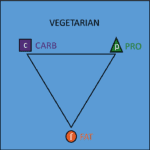 Vegetarians are those who don’t eat meat, fish or poultry, but do eat eggs and milk. These are also known as ovo-lacto vegetarians. Pescatarians are vegetarians who eat fish. People who eat a vegetarian or pescatarian diet can also eat low-carb or keto; they are not mutually exclusive.
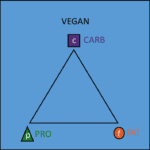 Vegans don’t eat any food of animal origin, including eggs, milk, butter or cream. They often refer to themselves as eating an entirely “plant-based” diet. A vegan diet can be done low-carb, but to obtain adequate nutrients takes a great deal of time and knowledge.
Low Carb (LCHF)
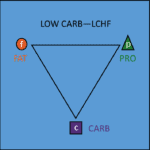 In a research context [1] and in clinical guidelines [2,3], low-carbohydrate diets (“low carb”) are those where carbohydrate intake is limited to <130 g per day or < 26% of total energy intake [1].
These are also referred to as low carb high fat diets (LCHF). Moderate carbohydrate diets are where carbohydrate intake is limited to 130—225 g per day or 26—45% of total energy intake [1]. A “Paleo diet” is modelled after hunter-gatherer ancestors and is essentially a low-carbohydrate diet using ancestral protein and fat sources.
The Keto Diet
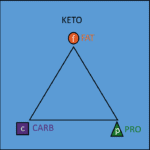 A keto diet is a subtype of low-carb diet referred to as a “very low-carbohydrate diet“. This is one where carbohydrate intake is limited to 20-50 g per day or 10% of total energy intake [1,2,3].
They are called “keto” diets because at this very low level of carbohydrate intake, blood ketones increase at or above 0.5 mmol/L, resulting in a state known as “ketosis“. Keto diets used for weight loss or type 2 diabetes management usually target betahydroxybutyrate (BHB) levels between 1.5-3.0 mmol/L [4].
Therapeutic Ketogenic Diet
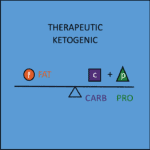 The first therapeutic ketogenic diet was used in the 1920s by Dr. Russell Wilder for the treatment of diabetes and later, for epilepsy. The percentages for the ”classic” Ketogenic Diet (KD) were worked out by Dr. M.G. Peterman in 1925 [5].
Since the 1920s, other therapeutic versions have been developed for epilepsy and seizure disorder, including the Modified Ketogenic Diet (MKD) and the Modified Atkins Diet (MAD). These may also be prescribed as adjunct treatment in glioblastoma or Alzheimer’s disease.
The classic KD has a 4:1 ratio (4 parts fat for every 1 part protein plus carbohydrates). In the classic KD, 80% of calories come from fat and 20% from protein/carbohydrate. The MKD has a 3:1 ratio (75% fat), and the MAD has a 2:1 ratio (60% fat). These are not weight loss diets; they seek to produce high ketone levels (> 4.0 mmol/L) for therapeutic reasons.
Carnivore and P:E Diets
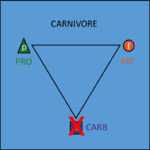 Carnivores eat only protein and fat of animal origin. Carnivores and vegans are opposites — one eating ONLY animal products and the other not eating any animal products.
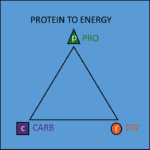 Protein to Energy (P:E) is a class of diet focusing on eating the most protein for the least energy. It is not a low-carbohydrate diet as recommendations often exceed 130 g per day.
Final Thoughts
There is no “best diet” for everyone. The “best diet” for an individual is one that meets their personal health goals and objectives, and that is consistent with their beliefs.
More Info?
Learn about me and the support that I can provide you with, regardless of your dietary preference*. View my Comprehensive Dietary Package here.
*Please note that I do not design Meal Plans for those who are vegan or carnivore, as I do not have the knowledge or experience to do so.
To your good health!
Joy
You can follow me on:
Twitter: https://twitter.com/jyerdile
Facebook: https://www.facebook.com/BetterByDesignNutrition/
References
- Feinman RD, Pogozelski WK, Astrup A, et al. Dietary carbohydrate restriction as the first approach in diabetes management: critical review and evidence base. Nutrition. 2015 Jan;31(1):1-13. [https://pubmed.ncbi.nlm.nih.gov/25287761/]
- Evert AB, Dennison M, Gardner CD, et al. Nutrition Therapy for Adults With Diabetes or Prediabetes: A Consensus Report. Diabetes Care. 2019 May;42(5):731-754. [https://diabetesjournals.org/care/article/42/5/731/36444/Nutrition-Therapy-for-Adults-With-Diabetes-or]
- Diabetes Canada. Diabetes Canada Position Statement on Low-Carbohydrate Diets for Adults With Diabetes: A Rapid Review. Can J Diabetes. 2020 Jun;44(4):295-299. [https://pubmed.ncbi.nlm.nih.gov/32475469/]
- Bhanpuri NH, Hallberg SJ, Williams PT, et al. Cardiovascular disease risk factor responses to a type 2 diabetes care model including nutritional ketosis induced by sustained carbohydrate restriction at 1 year. Cardiovasc Diabetol. 2018 May 1;17(1):56. [https://pubmed.ncbi.nlm.nih.gov/29712560/]
- Peterman MG. The Ketogenic Diet. JAMA. 1928 May 5;90(18):1427-1429. [https://jamanetwork.com/journals/jama/article-abstract/269045]

© 2025 BetterByDesign Nutrition Ltd.

Joy is a Registered Dietitian Nutritionist and owner of BetterByDesign Nutrition Ltd. She has a postgraduate degree in Human Nutrition, is a published mental health nutrition researcher, and has been supporting clients’ needs since 2008. Joy is licensed in BC, Alberta, and Ontario, and her areas of expertise range from routine health, chronic disease management, and digestive health to therapeutic diets. Joy is passionate about helping people feel better and believes that Nutrition is BetterByDesign©.