
NOTE: This article was originally published on September 4, 2019, and was updated on August 18, 2026. The first article in the series of three about Small Intestinal Bacterial Overgrowth (SIBO) covered what SIBO is, how common it is, and its primary symptoms. This article covers the different tests used in diagnosing SIBO, and the final article outlines treatment options, including dietary protocols combined with antibiotic or herbal therapies.
Why is it So Hard to Get Diagnosed With SIBO?
One of the challenges of getting diagnosed with Small Intestinal Bacterial Overgrowth (SIBO) is finding a General Practitioner (GP) / family doctor who is knowledgeable about this condition in the general population. Doctors know that SIBO can occur in patients with anatomical abnormalities such as diverticosis, surgical alterations of the GI tract, and severe gut motility disorders, but may be unaware, as outlined in the previous article, that people with low stomach acid as a result of aging or taking proton-pump inhibitor medication for GERD, motility issues common in diabetes and in Ehlers-Danlos Syndrome (hEDS), and moderate alcohol consumption can result in SIBO.
How Was SIBO Previously Diagnosed?
Historically, Gastroenterologists diagnosed SIBO using fluoroscopically guided intestinal intubation. This invasive, time-consuming procedure required passing a tube through the mouth or nose and guiding it into the jejunum (part of the small intestine) to withdraw small intestinal fluid for culture. A positive diagnosis was made when bacterial growth reached or exceeded 105 colony-forming units per milliliter [1], although modern clinical guidelines have since revised this diagnostic threshold down to 103 colony-forming units per milliliter [2].
Upper GI endoscopy, which became widespread in the 1980s and became the gold standard for diagnosing SIBO because it allowed for less invasive sampling of the fluid of the small intestine [3]. Upper GI endoscopy is performed while the patient is awake but sedated, and a flexible tube (endoscope) is passed through the esophagus and stomach into the duodenum or jejunum section of the small intestine to collect fluid.
Is Endoscopy Still the Gold Standard for Diagnosing SIBO?
Yes, upper GI endoscopy is still considered the gold standard for diagnosing SIBO; however, it is both expensive and invasive [2,3]. There are also other drawbacks to using endoscopy to diagnose SIBO.
Standard culture techniques only successfully grow 20%-30% of human gut bacteria, meaning that anaerobic bacteria remain undetected [4].
Sample contamination occurs during the endoscopy procedure (passage and withdrawal) and is a main source of diagnostic error [3,5].
Gene sequencing has found that quantitative cultures miss significant non-culturable microbial shifts in the small intestine [5].
What is Breath Testing for SIBO?
Breath testing is a practical, non-invasive diagnostic alternative for diagnosing SIBO that emerged with the discovery that gases such as hydrogen and methane are produced in the small intestine only as a by-product of unabsorbed or incompletely absorbed carbohydrates. These gases are absorbed into the bloodstream and exhaled via the lungs; so breath tests provide evidence of carbohydrate malabsorption and identify the types of bacteria causing the fermentation [2,4]. Current diagnostic criteria evaluate both hydrogen and methane dynamics [2].
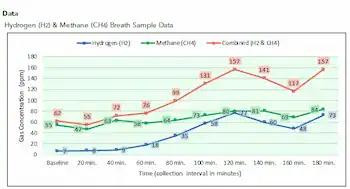
The two most common carbohydrates used as diagnostic substrates are glucose and lactulose. The American College of Gastroenterology 2020 Clinical Guidelines for Small Intestinal Bacterial Overgrowth suggest the use of glucose hydrogen or lactulose hydrogen breath testing for diagnosing SIBO in symptomatic patients with suspected motility disorders or previous abdominal surgery that included resection or reconstruction of the GI tract [1].
Glucose vs. Lactulose Breath Tests
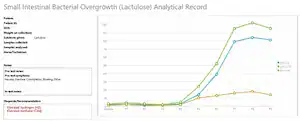
Clinicians often debate which substrate is more accurate. Glucose is absorbed completely in the upper small intestine, making it very accurate for that region, but it may miss SIBO located in the ileum (the far part of the small intestine). Conversely, lactulose is not absorbed by humans, allowing it to travel the full length of the small intestine and potentially detect overgrowth in the ileum [2,4]. Preference for these tests varies by practitioner.
How Are Breath Tests for SIBO Done?
Proper testing first requires an 8- to 12-hour overnight fast and specific oral hygiene, such as non-absorbable mouthwash before testing, to ensure upper airway bacteria do not cause false early gas spikes [4,6]. Exhaled breath samples are collected and analyzed every 15 to 20 minutes over a 2- to 3-hour period [6].
According to the 2017 North American Consensus guidelines, a rise in hydrogen of ≥20 ppm from baseline within 90 minutes is diagnostic for SIBO [6].
For methane, a concentration of ≥10 ppm at any point during the test is defined as positive, a finding formally classified in current guidelines as Intestinal Methanogen Overgrowth (IMO) [2,6]
Note: Leading researchers, including Dr. Mark Pimentel, note that lower methane thresholds (such as >3 ppm) can reflect clinically significant methanogen colonization in symptomatic patients, preventing missed diagnoses in clinical practice [2,6].
How to Tell the Difference Between SIBO and IBS
The symptoms of Irritable Bowel Syndrome (IBS) and SIBO overlap, with shared symptoms including abdominal pain, bloating, distention, and altered bowel habits [2,7], and current systematic reviews and meta-analyses have reported that ~31% -35.5% of IBS patients test positive for SIBO, making individuals with IBS nearly five times more likely to have bacterial overgrowth than healthy controls [7].
Furthermore, methane-positive breath tests correlate strongly with constipation-predominant IBS (IBS-C), whereas hydrogen-positive tests correlate primarily with diarrhea-predominant IBS (IBS-D) [2,7].
Clinical Reflections
If taking a dietary management approach to IBS (including but not limited to a low-FODMAP diet) does not resolve IBS symptoms, breath testing can be a valuable, non-invasive diagnostic next step to guide targeted antimicrobial therapies [2,7] and simultaneous dietary interventions, covered in the next article, Treating Small Intestinal Bacterial Overgrowth (SIBO).
More Info?
Learn about me and the Small Intestinal Bacterial Overgrowth (SIBO) Package that I offer.
To your good health!
Joy
You can follow me on:
Twitter: https://twitter.com/jyerdile
Facebook: https://www.facebook.com/BetterByDesignNutrition/
Quick Clinical Summary
Q: How is SIBO diagnosed?
A: While small bowel aspiration and fluid culture via endoscopy is considered the ‘gold standard,’ it is invasive and expensive. In modern clinical practice, non-invasive hydrogen and methane breath tests are the most common tools for identifying bacterial overgrowth.
Q: What is the difference between the glucose and lactulose breath tests?
A: Glucose is absorbed completely in the upper small intestine, making it accurate for the proximal region but prone to missing overgrowth in the lower ileum. Lactulose is not absorbed by humans, allowing it to traverse the entire length of the small intestine to detect distal SIBO.
Q: What gas levels indicate a positive SIBO result?
A: According to the 2017 North American Consensus, a rise in hydrogen of 20 ppm or more from baseline within 90 minutes is positive. For methane, a level of 10 ppm or more at any point during the test is considered positive for methane-predominant overgrowth.
References
- Khoshini, R., Dai, S. C., Lezcano, S., & Pimentel, M. (2007). A systematic review of diagnostic tests for small intestinal bacterial overgrowth. Digestive Diseases and Sciences, 53(6), 1443–1454. https://doi.org/10.1007/s10620-007-0065-1
- Pimentel, M., Saad, R. J., Long, M. D., & Rao, S. S. C. (2020). ACG Clinical Guideline: Small Intestinal Bacterial Overgrowth. American Journal of Gastroenterology, 115(2), 165–178. https://doi.org/10.14309/ajg.0000000000000501
- Roszkowska, P., Klimczak, E., Ostrycharz, E., et al. (2024). Small Intestinal Bacterial Overgrowth (SIBO) and Twelve Groups of Related Diseases—Current State of Knowledge. Biomedicines, 12(5), 1030. https://doi.org/10.3390/biomedicines12051030
- Ghoshal UC. How to interpret hydrogen breath tests. Journal of Neurogastroenterology and Motility. 2011 Jul;17(3):312-317. [https://doi.org/10.5056/jnm.2011.17.3.312]
- Leite, G., Rezaie, A., Mathur, R., et al. (2024). Defining Small Intestinal Bacterial Overgrowth by Culture and High Throughput Sequencing. Clinical Gastroenterology and Hepatology, 22(2), 259–270. https://doi.org/10.1016/j.cgh.2023.06.001
- Rezaie A, Buresi M, Lembo A, et al. Hydrogen and Methane-Based Breath Testing in Gastrointestinal Disorders: The North American Consensus. American Journal of Gastroenterology. 2017 May;112(5):775-784. [https://doi.org/10.1038/ajg.2017.46]
- Shah, A., Talley, N. J., Jones, M., Kendall, B. J., Koloski, N., Walker, M. M., Morrison, M., & Holtmann, G. J. (2020). Small Intestinal Bacterial Overgrowth in Irritable Bowel Syndrome: A Systematic Review and Meta-Analysis of Case-Control Studies. The American Journal of Gastroenterology, 115(2), 190–201. https://doi.org/10.14309/ajg.0000000000000504


I am a Registered Dietitian Nutritionist and the owner of BetterByDesign Nutrition Ltd. With a postgraduate degree in Human Nutrition and a background as a published mental health nutrition researcher, I have been dedicated to supporting my clients’ clinical needs since 2008.
I hold active professional licenses in BC (CHPBC), Alberta (CDA), and Ontario (CDO), allowing me to provide regulated Medical Nutrition Therapy across these provinces. My expertise spans chronic disease management, complex digestive health, and therapeutic diets. I am deeply passionate about helping people reclaim their health, rooted in my firm belief that Nutrition is BetterByDesign©.