
Polycystic Ovarian Syndrome (PCOS) as a Metabolic Disorder

Introduction If PCOS is primarily a hormone and reproductive disorder, then the approach to treatment would be different than if high levels of male hormones and chronic failure to ovulate were symptoms. This article looks at PCOS as primarily a metabolic disorder, similar to other metabolic disorders that often accompany it. It is driven by … Read more

Canada Food Guide Needs a New Foundation

INTRODUCTION Almost everyone in the nutrition world is talking about the new Dietary Guidelines for Americans that were released on January 7, 2026, and how the US Food Pyramid has finally been turned on its head. As a Canadian Registered Dietitian who has been writing for more than a decade about the effects of Canada’s Food … Read more

Sugar Industry Paid to Shift Blame for Heart Disease to Fat

Note: This article was originally posted on March 12, 2018 and was updated on November 25, 2025.


Introduction

Today I was reminded about a post that I wrote almost eight years ago (March 12, 2018), about an article that had been published in the Journal of the American Medical Association in September 2016 [1]. The article revealed that the sugar industry had funded three renowned Harvard researchers to write a series of articles that downplayed or ignored known research that demonstrated sugar was a contributor to heart disease and instead put the blame solely on fat — especially saturated fat. I was shocked by its significance, and it made me wonder how much of what I learned in my training needed to be revisited in this light.

The three Harvard researchers were the late Dr. Fredrick Stare, Chair of Harvard’s School of Public Health Nutrition Department, the late Dr. Robert McGandy, Assistant Professor of Nutrition at the Harvard School of Public Health, and the late Dr. D. Mark Hegsted, a Professor in the same department.

Dr. Hegsted went on to be directly involved in the development of the 1977 US Dietary Goals, which served as the basis for the 1980 Dietary Guidelines for Americans. These were the first Guidelines that called for Americans to decrease consumption of meat and saturated fat with the belief that it would lower the risk of heart disease.

Following suit, in 1977, Canada’s Food Guide went through a major revision with a shift to increased carbohydrates in the diet and decreased fat. Following a report submitted to Health Canada in 1977 by the Committee on Diet and Cardiovascular Disease, which advised the government to take action to prevent diet-related chronic diseases such as heart disease and high blood pressure, the revised 1982 Canada’s Food Guide shifted towards even lower-fat products.

I wondered today how many people know that decades of “low fat” messaging in both the US and Canada began by the sugar industry paying three prominent Harvard researchers to blame fat as the cause of heart disease, while discounting the role of sugar. I decided it was time to write another article.

Sugar Industry Funding Helped Shift Blame to Fat — Especially Saturated Fat

In the mid-1960s, the Sugar Research Foundation (SRF), predecessor to the Sugar Association, aimed to counter research which suggested that sugar, not fat, might be a bigger contributor to atherosclerosis. The committee invited Dr. Frederick Stare of Harvard’s School of Public Health Nutrition Department to join its scientific advisory board and approved $6,500 ($65,750–$66,850 in 2025 dollars) “to support a review article that would respond to the research showing the danger of sucrose [1]”.

From the 2016 Kearns et al. article [1]:

“On July 13, 1965, the Sugar Research Foundation (SRF)’s executive committee approved Project 226, a literature review on Carbohydrates and Cholesterol Metabolism by Hegsted and Robert McGandy, overseen by Stare.”

Letters were exchanged between the Sugar Research Foundation tasked the three Harvard researchers with preparing a review article of the several papers which find some special metabolic peril in sucrose [sugar] and, in particular, fructose [1].

In a letter written to Dr. D.M. Hegsted, the Sugar Research Foundation made its agenda clear:

“Our particular interest had to do with that part of nutrition in which there are claims that carbohydrates in the form of sucrose make an inordinate contribution to the metabolic condition, hitherto ascribed to aberrations called fat metabolism. I will be disappointed if this aspect is drowned out in a cascade of review and general interpretation.” [2]

Hegsted replied on behalf of the Harvard team, saying:

“We are well aware of your particular interest in carbohydrate and will cover this as well as we can” [1].

Project 226, sponsored by the Sugar Research Foundation, resulted in a two-part review by McGandy, Hegsted and Stare that was published in the New England Journal of Medicine in 1967 titled “Dietary Fats, Carbohydrates and Atherosclerotic Disease” [3]. There was no mention of the Sugar Research Federation sponsorship of the research [1].
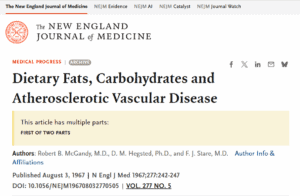
Dietary Fats, Carbohydrates and Atherosclerotic Disease

The first part of the two-part review article written by Drs. Stare, Hegsted and McGandy stated;

“Since diets low in fat and high in sugar are rarely taken, we conclude that the practical significance of differences in dietary carbohydrate is minimal in comparison to those related to dietary fat and cholesterol.”

The report continued:

”the major evidence today suggests only one avenue by which diet may affect the development and progression of atherosclerosis. This is by influencing the levels of serum lipids [fats], especially serum cholesterol.“

”…there can be no doubt that levels of serum cholesterol can be substantially modified by manipulation of the fat and cholesterol of the diet.“

”on the basis of epidemiological, experimental and clinical evidence, that a lowering of the proportion of dietary saturated fatty acids, increasing the proportion of polyunsaturated acids and reducing the level of dietary cholesterol are the dietary changes most likely to be of benefit.“

Dr. Marion Nestle, Professor of Nutrition, Food Studies and Public Health at New York University, wrote an editorial that appeared in the same issue of the Journal of the American Medical Association as Kearns’ article [1]. In it, she said that the documents provided “compelling evidence” that the sugar industry initiated Project 226 to exonerate sugar as a major risk factor for coronary heart disease [4].

Hegsted and the 1977 US Dietary Goals
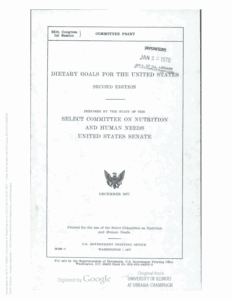
Dietary Goals for the United States, 1977

Dr. Hegsted went on to play a significant role in advising the Select Committee on Nutrition and Human Needs that oversaw the development of the 1977 Dietary Goals for the United States — and oversaw the writing of the first Dietary Guidelines for Americans that called for a reduction in saturated fat consumption to lower the risk of coronary heart disease [5], [6].

Below is a quote about Dr. Hegsted’s role in the Select Committee on Nutrition and Human Needs that oversaw the 1977 Dietary Goals for the United States.

“Dr. Hegsted has worked very closely and patiently with the committee staff on this report, devoting many hours to review and counselling. He feels very strongly about the need for public education in nutrition and the need to alert the public to the consequences of our dietary trends. He will discuss these trends and their connection with our most killing diseases. [5]”

There were 8 hearings of the Committee titled “Diet Related to Killer Diseases” that were held from July 1976 until October 1977 [6], which provided an opportunity for US senators to hear from leading scientists, government officials, and business representatives about the risks of diet on heart disease, cancer, and other chronic diseases.

“Of those who gave testimony at the first hearings, perhaps the two most important were assistant secretary for health and former director of the National Heart and Lung Institute, Theodore Cooper, and Professor Hegsted” [6].

Interestingly, Dr. Hegsted admitted that the primary evidence for “killer diseases” was epidemiologic, the weakest form of scientific data, and not clinical data [8]. Despite this admission, Hegsted stated that there was a clear linkage between plasma serum lipids, atherosclerosis and coronary disease and that it was clear that diet controls cholesterol levels [8].

Hegsted’s statement that there was “a clear linkage” between plasma fat and heart disease was based on only 8 randomized clinical trials that were available at the time, and which had only 2,467 male subjects, and no female subjects [9].

Furthermore, there was no clinical evidence that reducing total fat or saturated fat lowered death from all causes or cardiovascular disease [9].

Several researchers pleaded with the Committee to wait for more research. The director of the National Heart, Lung and Blood Institute, Dr. Robert Levy, said “no one knew if eating less fat would prevent heart attacks“.

Dr. Robert Olson of St. Louis University said, “I plead in my report and will plead again orally here for more research on the problem before we make announcements to the American public.

Dr. Peter Ahrens said, “advising Americans to eat less fat on the strength of such marginal evidence was equivalent to conducting a nutritional experiment with the American public as subjects“.

Committee Chairman Senator McGovern responded:

“Senators don’t have the luxury that the research scientist does of waiting until every last shred of evidence is in.”

Hegsted believed there could be “no risk” to recommending that the American public eat less meat, less fat, particularly saturated fat, and less cholesterol [8].

Long-Term Outcomes and Modern Evidence

Hegsted relied heavily on Ancel Keys’ yet-unpublished Seven Countries Study [9], which compared men aged 40–59 in the USA, Finland, the Netherlands, Yugoslavia, Greece, and Japan.

The Seven Country Study data have been criticized for decades for several reasons, including the fact that Keys omitted countries such as Switzerland or France, which were known to have very high saturated fat consumption, yet low rates of heart disease.

In addition, data from Greece, Italy and Yugoslavia were thought to have not been representative of what they normally ate, since these countries were still facing poverty post WWII.

Despite the limitations, a hypothesis linking saturated fat to heart disease formed the basis for 40+ years of low-fat dietary advice in the US and Canada. These recommendations were largely epidemiology-based and assumed that reducing meat and saturated fat while increasing grains and cereals carried no risk.

The results?

Heart disease remains the leading killer — not only in the US, but according to the CDC, worldwide. Decreasing dietary saturated fat did nothing to change this. In fact, a 2020 meta-analysis in the Journal of the American College of Cardiology found no benefit in lowering saturated fat for cardiovascular disease or mortality, and suggested saturated fat may be protective against stroke [7].

Meanwhile, over the past 40+ years, obesity and type 2 diabetes rates have skyrocketed, along with carbohydrate intake — both of which are known to increase the risk of cardiovascular disease.

Final Thoughts

It is historically significant that the sugar industry’s funding of three Harvard researchers resulted in the absolving of sugar as having a role in the development of heart disease and placed the blame solely on saturated fat.

Dr. Hegsted’s subsequent influence on the 1977 US Dietary Goals and the 1980 Dietary Guidelines highlights the adverse role that industry-sponsored research can have on people’s health.

National dietary guidelines concerning saturated fat intake based on weak epidemiologic data “was equivalent to conducting a nutritional experiment with the American public as subjects.”

As a Dietitian, making recommendations to individuals to lower dietary saturated fat intake based on lab work and family history is good clinical practice. Establishing general population-based dietary guidelines to reduce the intake of saturated fat based on weak evidence is not.

National dietary guidance must be based on robust clinical data, as well as epidemiological studies — including the impact of different types of fats in heart disease. It also needs to factor in the role of sugar and refined dietary carbohydrates as drivers of obesity and metabolic disease, which can contribute to heart disease.

More Info

If you have been eating “low-fat everything,” yet finding your blood sugar steadily rising, I can help.  Learn about me and the Comprehensive Dietary Package here.

To your good health.

Joy

You can follow me on:
Twitter: https://twitter.com/jyerdile
Facebook: https://www.facebook.com/BetterByDesignNutrition/

References

  1. Kearns C, Schmidt LA, Glantz SA, et al. Sugar Industry and Coronary Heart Disease Research: A Historical Analysis of Internal Industry Documents. JAMA Intern Med. 2016;176(11):1680-1685. [https://pubmed.ncbi.nlm.nih.gov/27617709/]
  2. Husten L. How Sweet: Sugar Industry Made Fat the Villain. Cardio|Brief, Sept 13, 2016. [https://www.cardiobrief.org/2016/09/13/how-sweet-sugar-industry-made-fat-the-villain/]
  3. McGandy RB, Hegsted DM, Stare FJ. Dietary fats, carbohydrates and atherosclerotic vascular disease. N Engl J Med. 1967;277(5): part 1: pg. 186-192 and part 2: pg. 242–247. [part 1: https://www.nejm.org/doi/10.1056/NEJM196708032770505], [part 2: https://www.nejm.org/doi/abs/10.1056/NEJM196707272770405]
  4. Nestle M. Food Industry Funding of Nutrition Research: The Relevance of History for Current Debates. JAMA Intern Med. 2016;176(11):1685–1686. [https://pubmed.ncbi.nlm.nih.gov/27618496/]
  5. Dietary Goals for the United States, Select Committee on Nutrition and Human Needs, United States Senate. Washington: U.S. Govt. Print. Off., 1977. [https://www.govinfo.gov/content/pkg/CPRT-95SPRT98364O/pdf/CPRT-95SPRT98364O.pdf]
  6. Oppenheimer GM, Benrubi ID. McGovern’s Senate Select Committee on Nutrition and Human Needs versus the meat industry on the diet-heart question (1976-1977). Am J Public Health. 2014;104(1):59–69. [https://pmc.ncbi.nlm.nih.gov/articles/PMC3910043/]
  7. Astrup A, Magkos F, Bier DM, et al. Saturated Fats and Health: A Reassessment and Proposal for Food-based Recommendations. J Am Coll Cardiol. 2020;75(24):3118–3135. [https://pubmed.ncbi.nlm.nih.gov/32562735/]
  8. United States Congress. Diet related to killer diseases: hearings before the Select Committee on Nutrition and Human Needs. 1977. [Link]
  9. Harcombe Z. An examination of the randomized controlled trial and epidemiological evidence for the introduction of dietary fat recommendations in 1977 and 1983. 2015. [https://pubmed.ncbi.nlm.nih.gov/25685363/]
  10. Yerushalmy J, Hilleboe HE. Fat in the diet and mortality from heart disease: a methodologic note. N Y State J Med. 1957. [https://pubmed.ncbi.nlm.nih.gov/13441073/]

Nutrition is BetterByDesign

Please note: At this time, all services are provided via a secure telehealth portal.

Privacy Policy | Terms of Use

© 2025 BetterByDesign Nutrition Ltd. All rights reserved.

LEGAL NOTICE: The contents of this blog, including text, images, and cited statistics, are for informational purposes only. The content is not intended to be a substitute for professional medical advice, diagnosis, or treatment. Always seek the advice of your physician or other qualified health provider with any questions you may have regarding a medical condition. Never disregard professional medical advice or delay in seeking it because of something you have read in this content.

Worse Than Table Sugar? This Hidden Carbohydrate May Be Spiking Your Blood Sugar

Note: This article was originally posted on November 13, 2025, and has been updated to include the effect on the gut’s microbiome and ability to regulate glucose. Introduction A recently updated article titled “Complex Carbohydrates as Long Chains of Sugar Molecules” explained that “complex carbohydrates” are essentially long chains of sugar molecules, like pearls on … Read more

Hemorrhoids — more than the butt of jokes

[This article was written on October 10, 2025, and was updated on January 28, 2026.] Introduction We are finally breaking the stigma and talking about mental health. Men grow moustaches in November to raise awareness about prostate health, so it is time to move past embarrassment and talk about colorectal health. This article is about … Read more

Dietary and Lifestyle Changes to Avoid “Old People Smell”

NOTE: This article was updated on October 10, 2025. Introduction In Western culture, the main focus as we age is to keep ourselves “looking young,” usually pursued by buying special skin and hair-care products. In Japan, avoiding “kareishu”, or “old people smell,” is a significant focus in aging. There are special soaps and washing products … Read more

Intermittent Fasting and Time Restricted Eating — duration and timing

Introduction People have heard about the benefits of intermittent fasting and time-restricted eating; however, the duration and timing of fasting are important considerations. Intermittent fasting refers to specific times for ‘eating’ and ‘not eating’ (fasting) on a set schedule. There are two main types, which are (1) partial fasting or alternate-day fasting, and (2) time-restricted … Read more

Significant Increase in Functional Dyspepsia Since the Pandemic

Introduction Functional Dyspepsia is a disorder similar to Irritable Bowel Syndrome (IBS), which affects the stomach rather than the bowel, and just like IBS, it is diagnosed after ruling out underlying structural or biochemical causes such as peptic ulcers, gastritis, or Gastro-Esophageal Reflux Disorder (GERD). Symptoms of Functional Dyspepsia may include pain or burning called … Read more

Vitamin B12 Levels May Be Set Too Low for Older Adults

Introduction A recent study published in the Annals of Neurology on February 10, 2025, suggests that levels of vitamin B12 considered within lab-normal values may be too low to prevent cognitive decline in healthy older adults [1]. What is Vitamin B12? Vitamin B12, also known as cobalamin, is a water-soluble vitamin found in foods of … Read more

Dietary Support for Hypermobile Ehlers-Danlos Syndrome (hEDS)

Introduction Ehlers-Danlos syndrome (EDS) is a group of genetic connective-tissue disorders that often present as symptoms of joint hypermobility (joints that bend in unusual ways), joint instability, stretchy, fragile skin, with accompanying gastrointestinal symptoms. There are approximately 13 subtypes of Ehlers-Danlos syndrome, with the most common type and the one that I support being Hypermobile … Read more

A Different Type of F.A.C.E. Time

Introduction Last weekend, I listened to a podcast that featured Dr. Vonda Wright, MD, who is an orthopedic surgeon and longevity exper,t who spoke about our choice to do nothing and become frail as we age, or to implement mobility activity so we can retain and build muscle and bone mass. It was worth sharing. … Read more

Extended Benefits: What are Reasonable and Customary Charges?

Introduction Approximately 90% of Canadians (87%) have extended health benefit plans; 64% of people have them through their employer, another 14% access them through another type of group plan, and 9% of people buy private health insurance [1]. Significantly, most major insurers (7 out of 10) cover Registered Dietitian services in their standard plan [2]. … Read more

Three and a Half Years Later – 100 pounds weight maintenance

Note: This article is 3 of 3 anecdotal accounts of a former client’s personal health journeys. It represents their unique experience and is not intended as medical advice or scientific evidence. Introduction “In October 2019, I began my food addiction recovery and weight loss journey with Joy, and after recently rereading the post that I … Read more

Int’l Diabetes Federation – evidence for 1-hour glucose assessor

Introduction The International Diabetes Federation has just released a new Position Statement that indicates that an oral glucose tolerance test performed at 1 hour is more effective in screening at-risk individuals for prediabetes and type 2 diabetes than a 2-hour Oral Glucose Tolerance Test (OGTT). The International Diabetes Federation is a non-profit umbrella organization of … Read more

DEXA Bone Density Scans – accuracy depends on where it is done

Introduction If you are considering having a DEXA bone density scan to assess your risk of osteoporosis, where you have it done will significantly impact the accuracy of the results, and whether they will provide you with the information you want. While dual-energy X-ray absorptiometry (DEXA) bone density scans are considered the gold standard for … Read more

DEXA Body Composition Scans as Assessors of Bone Density

Introduction DEXA Bone Density Scans are the gold standard for assessing the quality of the inside of bone and determining whether a person has osteopenia or osteoporosis. However, a DEXA Body Composition Scan is a different tool entirely. While it is excellent for assessing body fat amount and distribution, it often includes “bone mineral density” … Read more

Protein Quality: Why Plant and Animal Sources Are Not Equivalent

NOTE: This article was originally posted on August 20, 2023, and was revised and reposted on January 22, 2026. It now includes the latest research on protein quality and bioavailability, and the significance of adding even a small amount of animal protein, such as egg or dairy. Introduction Some people are considering going “plant-based” for … Read more

Why A Smoothie is “Pre-Chewed” Food

Note: This article was originally posted on August 13, 2023, and was updated and reposted on November 25, 2025. Introduction In the interest of time, many people throw a cup or more of fruit, some green veggies, and maybe some protein powder into a blender to make a smoothie for breakfast. But most people don’t … Read more

Older Adults Need More Protein to Prevent Muscle Loss

NOTE: This article was originally posted on August 11, 2023, and has been updated and reposted on January 20, 2026. Introduction The inability to retain muscle and strength associated with aging is called sarcopenia. Since adults lose approximately 1% of muscle mass each year after the age of thirty [1], knowing how to retain muscle … Read more

The Death of Peers and Parents Should Change the Way We Live

Note: This article is 3 of 3 articles that have been posted to this website and are in a separate category from research articles, and that category is called “A Dietitian’s Journey”. These 3 articles document my continued determination to restore my weight to what it had been before my diagnosis of hypothyroidism (July 6, 2023 – July 20, 2023). This article represents only my personal experience. It should not be treated as scientific evidence or medical advice.


Introduction

Last week, I flew to Montreal to be with my mom in the last days before her death. While it was hard to see how much she had changed, it was sobering to be reminded of something I started to realize six years ago — that the death of friends and family should change the way we live.

The untimely death of two college friends in 2017 was the impetus for me to finally change my own diet and lifestyle. One of my friends died of a stroke and the other of a massive heart attack; both worked in healthcare their entire lives. As mentioned several times in “A Dietitian’s Journey,” I knew that my death would be next if I didn’t lose weight and lower my very high blood pressure and blood sugar.

My Journey Toward Remission

While it took me twice as long as it should have to accomplish my health and weight goals due to undiagnosed hypothyroidism, I was successful in losing 55 pounds and taking a foot off my waist, and in putting my hypertension and type 2 diabetes into remission. Many times I was asked why I took accomplishing my goal so seriously, and my reply was always the same: “I am doing this as if my life depends on it, because it does.”

When my dad was diagnosed with Alzheimer’s disease, I once again made some lifestyle changes. Even though I had put my type 2 diabetes into remission with diet, I began taking a low dose of the prescription medication Metformin preventatively, while continuing to eat a low-carb diet. But, like many people, I became somewhat complacent and maybe even a little bit smug that diet alone was enough. In the years since my dad’s death, I ended up discontinuing my medication with my doctor’s knowledge.

Something that I was missing in my decision to discontinue this medication was that my health had changed, and I didn’t know it yet.

The Impact of Hypothyroidism

When I was diagnosed with profound hypothyroidism a little over a year ago, my doctor told me that even with thyroid hormone replacement medication, it would take a year and a half to fully recover due to how advanced it was. I wanted to understand how my body had changed, so I turned to scientific literature and learned how hypothyroidism affected my heart rate, blood pressure, and cholesterol, writing about it here.

For a while, I took a “baby dose” of blood pressure medication and made hypothyroid-specific dietary changes, but eventually stopped taking it, waiting for the thyroid medication to reverse the symptoms. In retrospect, that was naive. I assumed metabolic markers would return to normal simply by waiting for recovery. Recently, after an increase in thyroid medication, I noticed my blood sugar was significantly higher than it had been in years, despite being compliant with my low-carb diet. I discovered that thyroid hormone replacement — even “natural” versions — can raise blood sugar, which I discussed here.

Facing Family History

Around the time my dad was diagnosed with Alzheimer’s, my mom was diagnosed with vascular dementia secondary to mild strokes (TIAs). At first, the signs were subtle—difficulty organizing lists—but over time, she lost the ability to read and write. My mom didn’t have high blood pressure but struggled her whole life with weight and a sedentary lifestyle.

The critical factor I wasn’t previously accounting for was the combined risk: my mom’s history of TIAs and vascular dementia combined with my current hypertension from thyroid disease, and my dad’s type 2 diabetes and Alzheimer’s history while my own blood sugar was rising. It is great to eat low carb and work out at the gym, but in light of these changes, taking Metformin and blood pressure medication only makes sense.

While in Montreal, I made a phone appointment with my doctor. We discussed my mother’s diagnosis and my current vitals. He agreed that resuming medication to monitor these levels regularly was the appropriate path.

Moving Forward Without Complacency

My mom's grave, beside my dad'sToday I buried my mom. While she died due to pneumonia and not vascular dementia, her death has changed how I will live. I realize that I can no longer be complacent and assume that eating a good diet and going to the gym several days a week is always “enough.”

Joy's parents' resting placeMy dad is buried beside my mom, and visiting his grave reminded me that his death was related to Alzheimer’s and 40 years of type 2 diabetes. While my current elevated blood sugar is a side effect of necessary thyroid medication, using all tools available—medication, diet, and exercise—is the logical choice to prevent a similar fate. His death, too, has changed how I will live.

Final Thoughts

Dietary and lifestyle changes are powerful and can effectively put both type 2 diabetes and hypertension into remission. However, when circumstances change, it is necessary to consider medication as an adjunct. I have no choice but to be on thyroid medication, just as someone with type 1 diabetes must take insulin. Given the side effects of those hormones and my genetic risk factors, I have chosen to let my parents’ deaths change my approach.

Taking medication is not a “failure.” Dying an unnecessary or premature death is. If taking medication, in addition to being active and eating well, helps avoid or significantly slow dementia, that is the best path forward.

To your good health,

Joy

Nutrition is BetterByDesign

Privacy Policy | Terms of Use

© 2025 BetterByDesign Nutrition Ltd.

LEGAL NOTICE: The contents of this blog, including text, images, and cited statistics, are for informational purposes only. The content is not intended to be a substitute for professional medical advice, diagnosis, or treatment. Always seek the advice of your physician or other qualified health provider with any questions you may have regarding a medical condition. Never disregard professional medical advice or delay in seeking it because of something you have read in this content. </div

Success is All About “Showing Up”

Note: This article is 2 of 3 articles that have been posted to this website and are in a separate category from research articles, and that category is called “A Dietitian’s Journey”. These 3 articles document my continued determination to restore my weight to what it had been before my diagnosis of hypothyroidism (July 6, … Read more